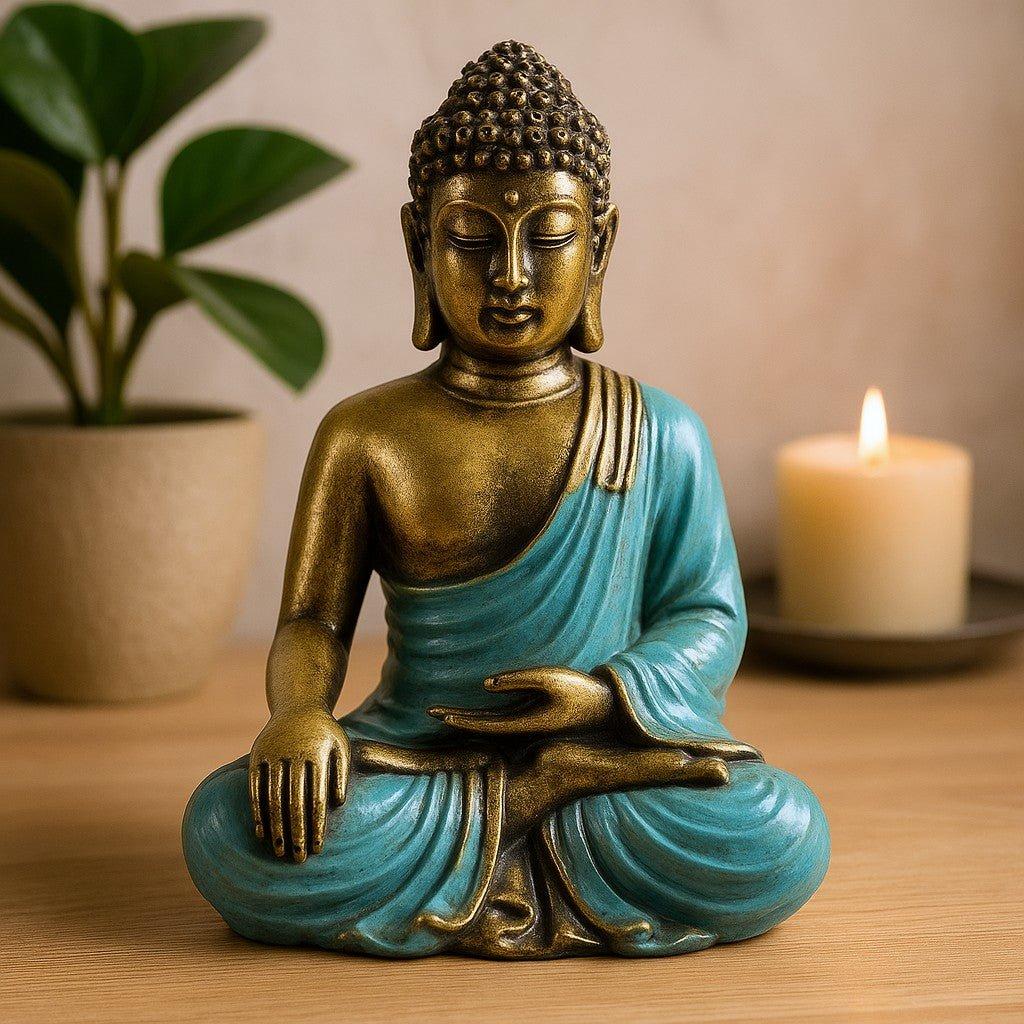
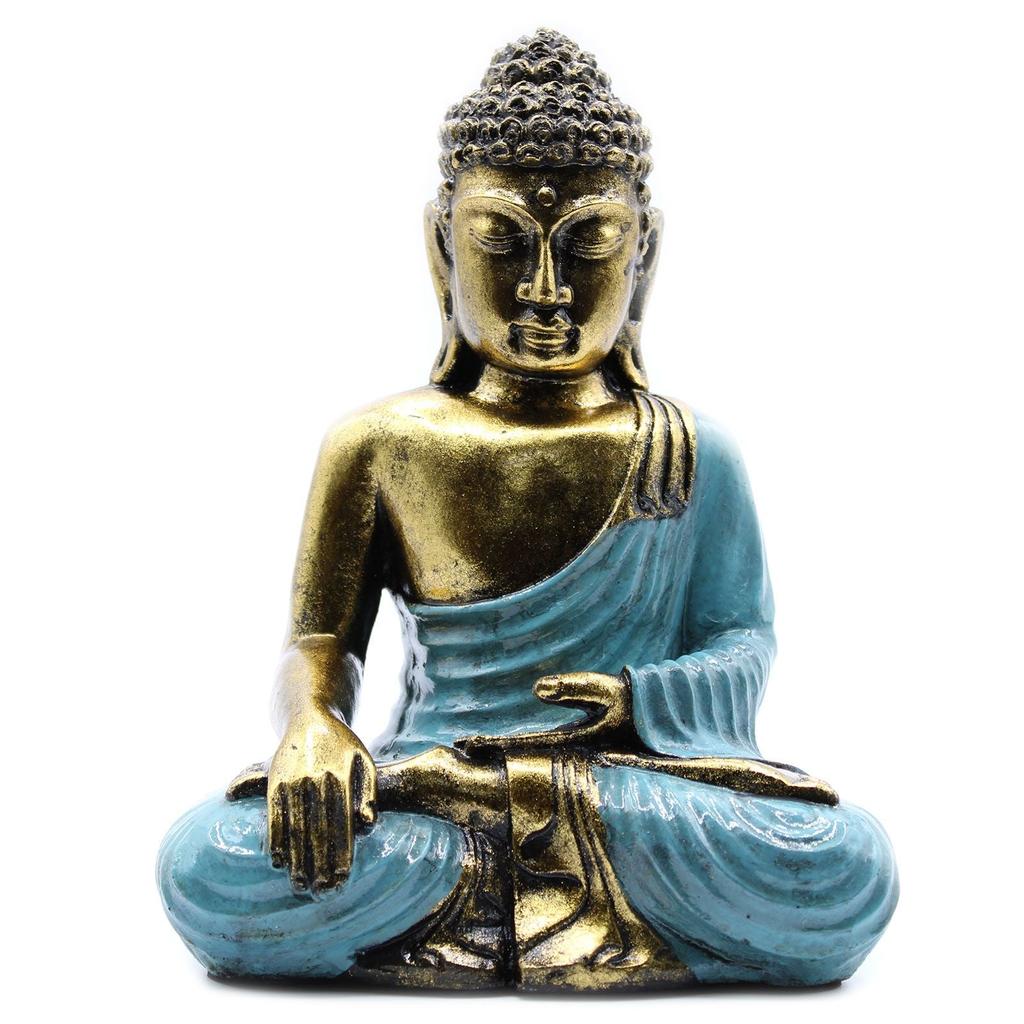
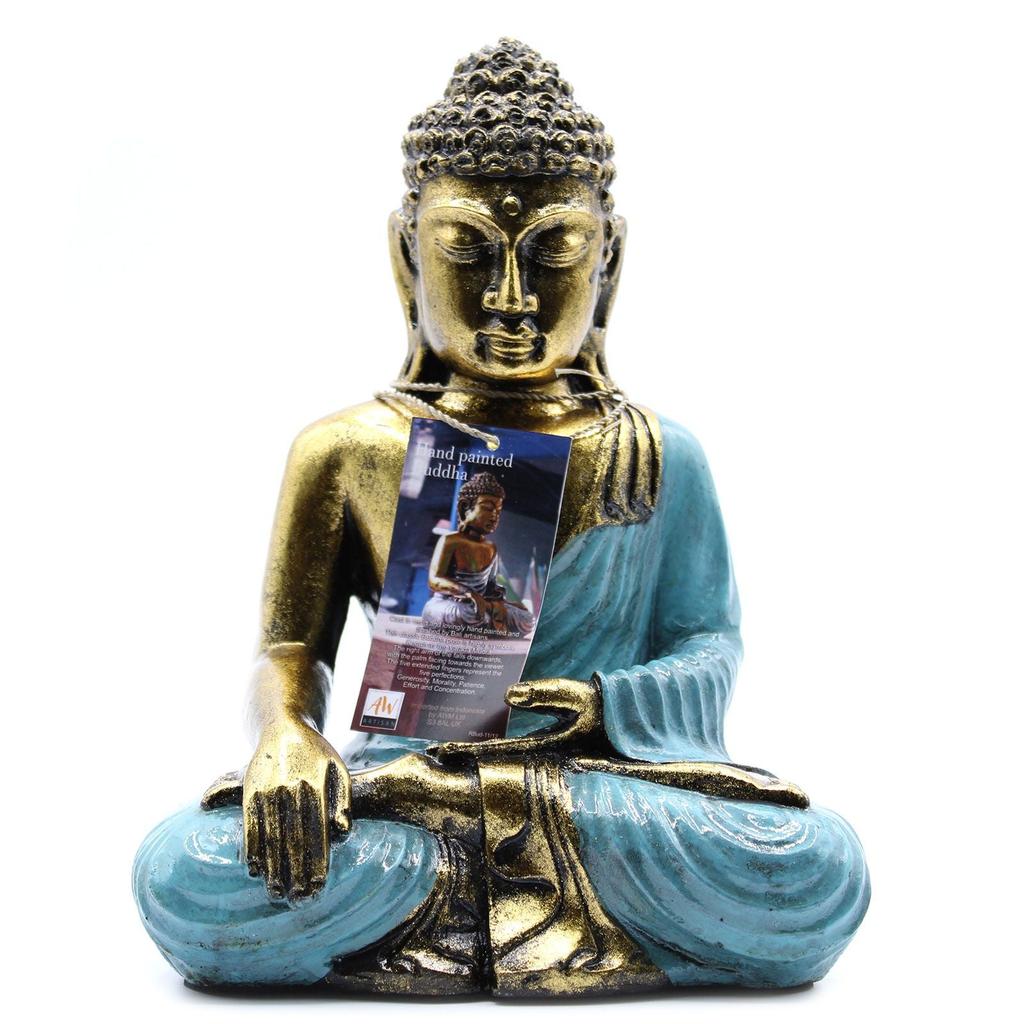
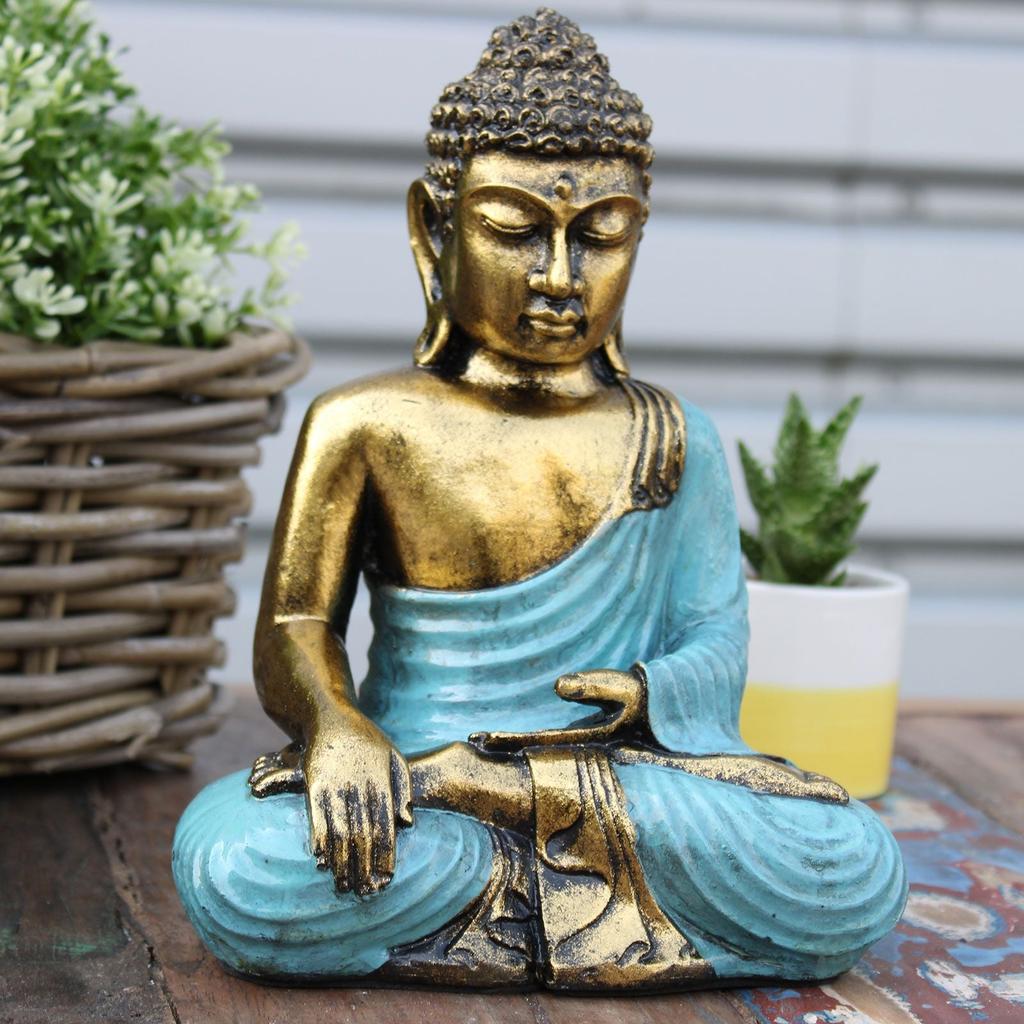
Placed on a shelf, desk or quiet corner, this resin Buddha statue has a composed presence: closed eyes, a grounded seated posture, and a teal robe that catches the light against an aged gold finish. The right hand rests open in varada mudra, a gesture traditionally associated in Buddhist iconography with generosity and compassion.
Pose and symbolism
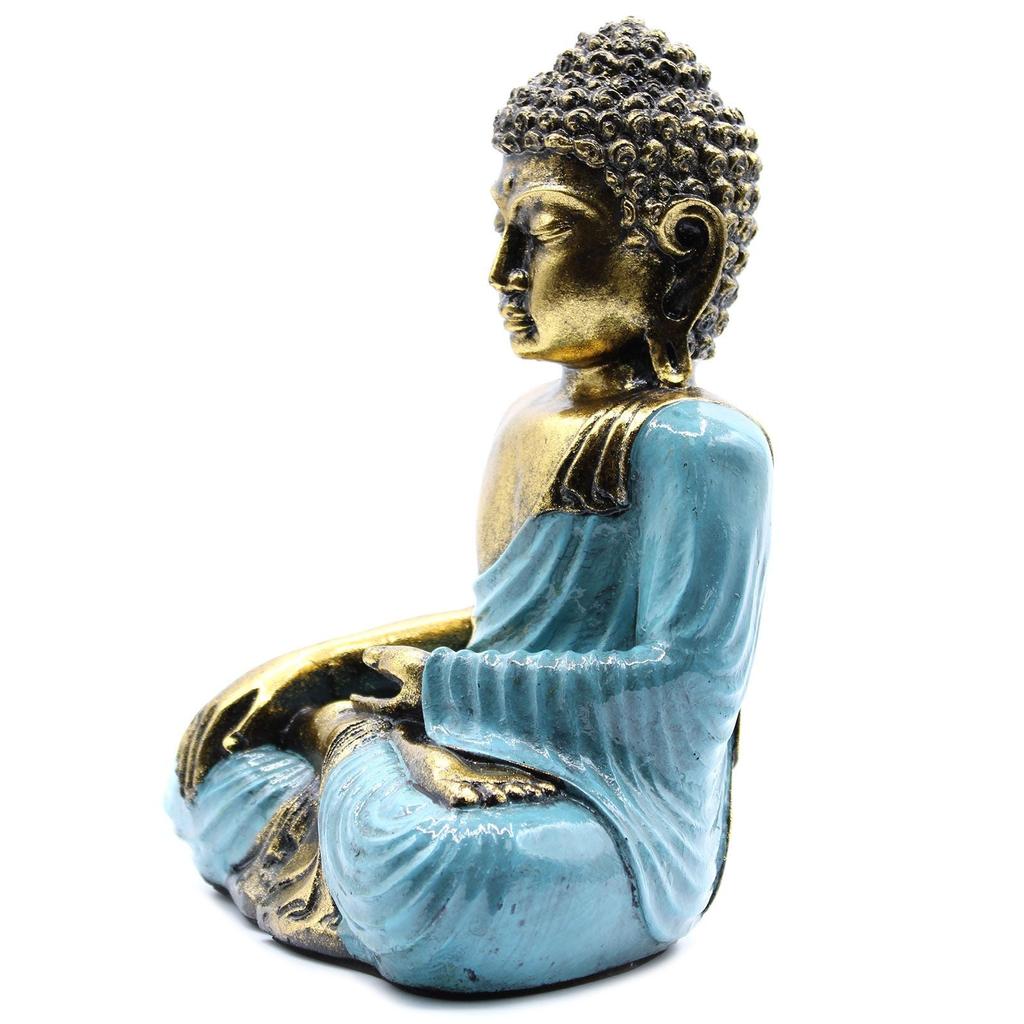
The seated form gives the piece a steady, contemplative feel, suited to an altar space, meditation corner or calm home display.
The open palm of the varada mudra is a recognised Buddhist hand gesture, often linked with giving, kindness and the wish to offer support.
The lowered gaze and balanced posture keep the expression gentle rather than decorative alone.
The teal robe adds colour without becoming loud, softening the darker antiqued gold of the face, hands and body.
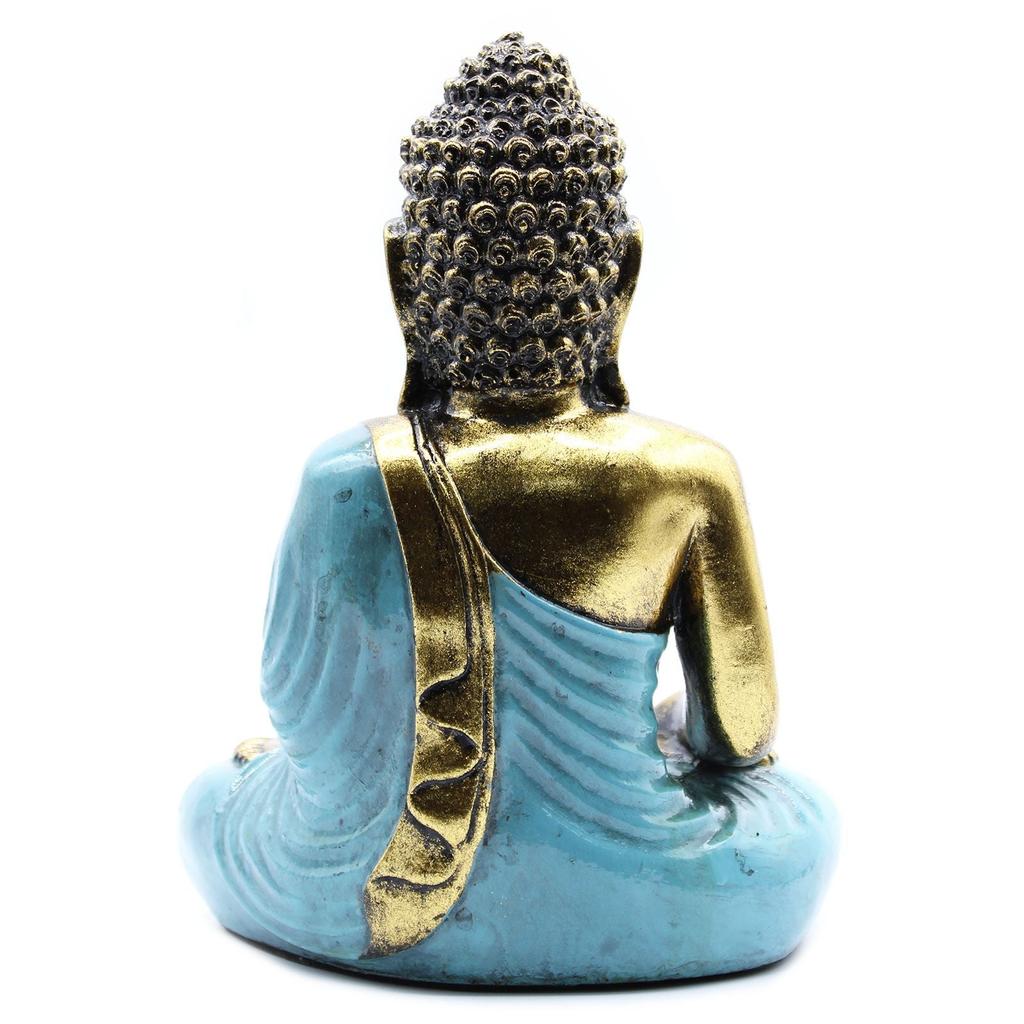
The curled hair, long ears and draped robe are clearly modelled as devotional Buddha iconography, treated with a quiet, respectful finish.
Resin, colour and hand-painted detail
Made from resin, this statue has the look of a weighty sculptural object while keeping the painted detail crisp. The finish is hand painted and completed by artisans in Bali, with teal folds, gold-toned highlights and darker shading that gathers around the facial features, robe edges and base.
How to place and care for it
Set it somewhere it can be seen without being crowded, such as a console table, windowsill away from strong direct light, bedside surface or meditation space. Dust with a soft dry cloth and avoid abrasive cleaners, as painted resin is best treated gently.
Varada mudra in context
In Buddhist art, mudras are symbolic hand positions that help identify a figure’s meaning and mood. Varada mudra, usually shown with the palm open and facing outward or downward, is associated with generosity, compassion and the act of offering. Here it appears in a seated Buddha form rather than the rounded, jovial Budai figure often called the laughing Buddha. The r…
region of manufacture: Indonesia




 Vrácení peněz při nedoručení