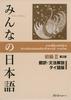
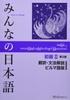
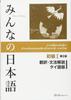
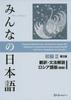
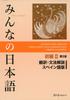
No desks or textbooks are used during class!
"First, try talking. Then study."
This will improve your communication skills!
1. Abundant illustrations make learning fun.
2. After you've mastered conversation, you review sentence structures, improving your conversational skills.
3. Easy to understand and use for both learners and teachers.
"Beginner 1" and "Beginner 2"
Attained Level: CEFR A1/A2, JLPT N5/N4
Vocabulary: Approximately 2,000 words
Kanji: Approximately 400 characters
Class Time: Approximately 360 hours
No need for desks or textbooks during class!
"First, try talking. Then study."
This will improve your communication skills!
1. Full of illustrations so you can enjoy your studies!
2. Check sentence structures after you've mastered conversation, improving your conversational skills!
3. Simple and easy to understand for both learners and teachers!
Attained Level: JF Standard A1/A2, JLPT N5/N4 Level
Number of vocabulary words you can learn: 2,000 words / 400 kanji characters
Overall class time: 360 hours (30 sections in total)
Aims of "Tsunagu Nihongo Beginner"
This book aims to help learners "become" proficient in Japanese for social communication. The learning scenarios are selected from workplace, school, and everyday life, based on situations where learners are likely to need to interact in Japanese.
Since this book's goal is to enable students to engage in social activities, it prioritizes "being able to communicate" in Japanese over "understanding" the language and grammar. The progression is as follows: first, students attempt a conversation based on a realistic situation (situational conversation), then review and practice the sentence patterns used in the conversation, and finally, perform applied practice to confirm their mastery.
Situational conversation → Sentence pattern review → Sentence pattern practice → Applied conversation
Since sentence patterns are reviewed after students have mastered situational conversation, students will be able to smoothly understand the meaning of the sentence patterns. Teachers don't need to provide lengthy explanations of sentence patterns, allowing students to spend most of their class time practicing conversation with each other. Another benefit of starting with situational conversations is that students quickly become able to converse naturally.
Structure of "Tsunagu Nihongo Beginner"
This textbook aims to equip students with the necessary communication skills for social activities in Japanese.
It consists of 30 lessons, divided into two volumes: Lessons 1 through 15 are "Beginner 1," and Lessons 16 through 30 are "Beginner 2."
"Beginner 2" covers interactions necessary for social life, such as explaining, exchanging opinions, and asking questions in everyday activities. Each lesson indicates what students can do.
Each lesson is divided into two to four parts. Each part includes one situational conversation and practice of the sentence patterns used in that conversation. The characters in the situational conversations are based on people from work, school, and everyday life. They include company employees and colleagues, superiors, Japanese language school students and teachers, apartment managers and residents, and neighbors.
The aim of this book is for students to become able to communicate at the level necessary to participate in society.
This book consists of 30 chapters, and this is divided into two volumes, "Basic 1," which contains chapter 1 to 15, and "Basic 2," which contains chapters 16 to 30.
![[Audio Download] Tsunagu Nihongo Beginner Level Series vol.2](https://img.joomcdn.net/291eef66ae735a432f741ed1dc478e3fdc62ec81_726_1024.jpeg)
![[Audio Download] Tsunagu Nihongo Beginner Level Series vol.2](https://img.joomcdn.net/9c0951b2f8c8f11c160000996aad824e6669c780_original.jpeg)