From Amazon
Electro-Harmonix ABOUT Electro-Harmonix
Electro-Harmonix was founded by Mike Matthews in October 1968. Their first product was a fuzz pedal called the "Axis Fuzztone." Later, they collaborated with Bob Meyer, a former Nobel Prize-winning engineer at Bell Labs, to create the original linear power booster, the "LPB-1." Despite being available only through mail order, this model became a huge hit, helping to establish the Electro-Harmonix brand. This was followed by the release of the legendary "Big Muff" in late 1969, and in the 1970s, they released a string of still-popular models, including the Small Stone and Memory Man, which enjoyed strong sales. Despite the company's success in the 1970s, the company faced labor union and parts supply issues in the 1980s, resulting in bankruptcy in 1984. Mike Matthews then traveled to the former Soviet Union and founded a new company, New Sensor Corp., in 1988. Under the "Sovtec" brand, the company has made a comeback as a comprehensive music equipment manufacturer, producing a succession of products including vacuum tubes, effects pedals, and amplifiers. In 1991, it regained the Electro-Harmonix trademark it had once lost, and in 2002 returned to its New York base, where it continues to provide unique effects pedals to players worldwide.
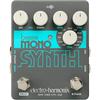
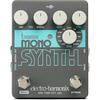
The "MICRO SYNTHESIZER" creates synth sounds and adds depth to music. The "Micro Synthesizer" offers all the essential elements for creating basic guitar sounds. From percussive sounds to bowed, reverse-rotation sounds, the 10 sliders allow you to control vintage analog synth sounds, as exemplified by early Moog synthesizers. The four controls in the "VOICE MIX" section create the original synth sound, while the four controls in the "FILTER SWEEP" section allow you to process it into a vintage analog synth sound. *When using an adapter, be sure to use the genuine JP9.6DC-200 adapter (included). Please note that damage or malfunction caused by the use of third-party adapters may not be covered by the warranty, even if the warranty period is still valid. "VOICE MIX" allows mixing. Each "VOICE MIX" control has an independent tone, allowing for a wide variety of mixing balances.
■OCTAVE/SUB OCTAVE: Activates only single notes. (When using, make sure only one string is sounding.) The OCTAVE tone contains a small amount of harmonic distortion to add depth to the sound.
■GUITAR: Adjusts the original guitar tone.
■SQUARE WAVE: The volume is determined by the guitar picking strength and the volume position; otherwise, it functions similarly to a standard fuzz.
●TRIGGER: Adjusts the sensitivity at which the microsynth's FILTER SWEEP (automatic tone control filter) begins to activate based on the guitar volume. Raising the sensitivity too high can result in complex triggering when playing chords, causing the filter to flutter. To adjust the sensitivity, play single notes at the guitar volume you use for lead playing, while slowly increasing the TRIGGER knob from 0 until the filter effect is clearly noticeable on each note. Once you've achieved the optimal sensitivity and balance, chord playing becomes possible to a certain extent. Transform your sound with the powerful FILTER SWEEP. The FILTER SWEEP controls allow you to express your guitar almost like a synthesizer.
■ RESONANCE: Controls the width of the filter's passable range and adjusts its sharpness. Increasing the resonance amount also produces a boost effect.
■ START FREQ: Determines the frequency at which the filter begins to operate.
■ STOP FREQ: Determines the frequency at which the filter sweep ends. This is also the standby frequency when the filter is not operating. When the START FREQ and STOP FREQ knobs are set to the same position, the filter will simply emphasize that frequency without sweeping.
■ RATE: Determines the time it takes for the filter to move from the start frequency to the end frequency after picking. *Must be adjusted to match your playing speed.
●ATTACK DELAY: Adjusts the time it takes for the four-voice mixed sound to reach full volume after picking. Turning this knob up completely eliminates the guitar pick attack, allowing you to create the subtle sounds of various instruments. *Must be adjusted to match your playing speed.
Product Introduction
■Product Description
The Micro Synthesizer uses 10 sliders to control vintage analog synth sounds, such as those of early Moog synthesizers, from percussive tones like bowed reverse sounds.
The four controls in the Voice Mix section create the original synth sound, while the four controls in the Filter Sweep section process it to create the vintage analog synth sounds heard on albums by Bootsy Collins and the Chemical Brothers.
■Specifications
・3-pole Analog Resonant Filter
・4 Voice Mixer (Sub Octave/Original/Octave/Square Wave)
・Filter Sweep (Resonance/Start Freq/Stop Freq/Rate)
・True Bypass
・Dimensions: 144mm (W) x 119mm (D) x 60mm (H)
・Weight: 550g
・Power Supply: 9V DC Center Negative Adapter JP9.6DC-200 (Included)
*When using an adapter, be sure to use the original JP9.6DC-200 adapter (included).
Please note that damage or malfunction caused by the use of adapters from other manufacturers may be void even within the warranty period.
This product is a domestically distributed product.
Please note that parallel imports are not covered by the distributor warranty.
Caution (Disclaimer) > Please Read
When using an adapter, be sure to use the original JP9.6DC-200 adapter (included).
Please note that damage or malfunction caused by the use of third-party adapters may not be covered by the warranty, even if the product is still within the warranty period.
Control vintage analog synth sounds, from percussive tones to bowed, reverse-rotating sounds, with 10 sliders.
Create the original synth sound with the four controls in the Voice Mix section, then process it into a vintage analog synth sound with the four controls in the Filter Sweep section.
True bypass
![Electro-Harmonix Micro Synthesizer Analog Effects Pedal [Official Japanese Product]](https://img.joomcdn.net/e97c0a2b49c59486a7495b1ccf93b587ea9d8776_1024_864.jpeg)


 Vrácení peněz při nedoručení


![Efektor analogový syntezátor Micro Syntezátor elektro-harmonix elektroharmonické []](https://img.joomcdn.net/c869f8ce980ec0423122294f7601d46cf71219d8_100_84.jpeg)


![Basový efektor analogový syntezátor Basový mikrosyntezátor elektro-harmonix elektroharmonické []](https://img.joomcdn.net/212cead960a697711d0c8c73b7a32fd0e1808d63_100_70.jpeg)