[Important Note - For Overseas Customers]
Thank you for purchasing this product. Please read the following important notes carefully before using this product overseas.
1. Legislation and safety standards
This product complies with Japanese safety standards. Please check compatibility with local regulations and safety standards before use in your country.
Certain product categories (electronics, cosmetics, food, etc.) may require certification from the importing country.
2. About electrical products
[Voltage compatible]
When using electrical appliances, please note that they are designed according to Japanese voltage specifications (90-110V), so using them at a different voltage may cause malfunctions.
[Plug type]
Our products use the Japanese plug type (A type or B type).
Please use a conversion adapter if necessary.
[Important notes regarding transformers and adapters]
A transformer adjusts the voltage to suit the requirements of the equipment.
Conversion adapters only change the shape of the plug and do not adjust the voltage.
Using only the conversion adapter without a transformer may damage the product.
[About responsibility]
We are not responsible for any failure or damage caused by improper usage, such as operating the product without a transformer.
3. Language and manual
Product instructions and displays may only be in Japanese.
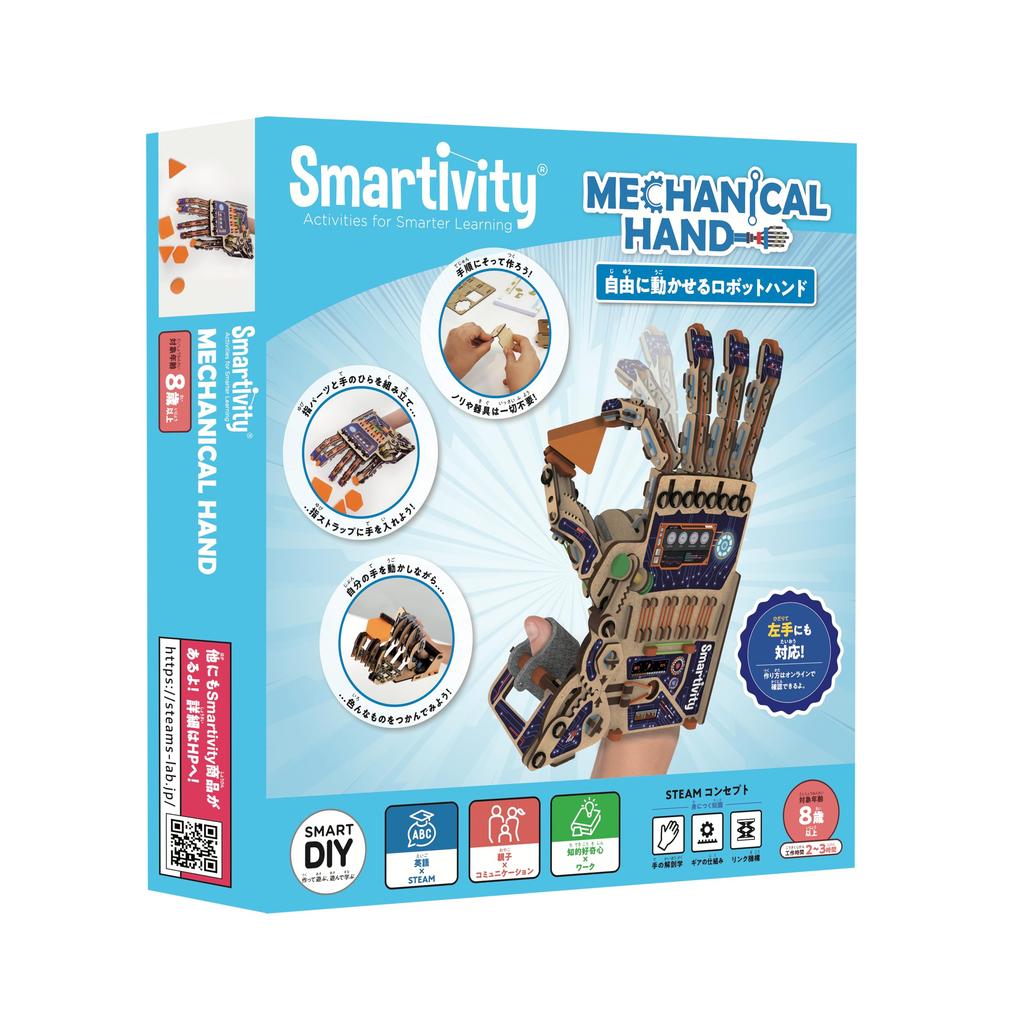
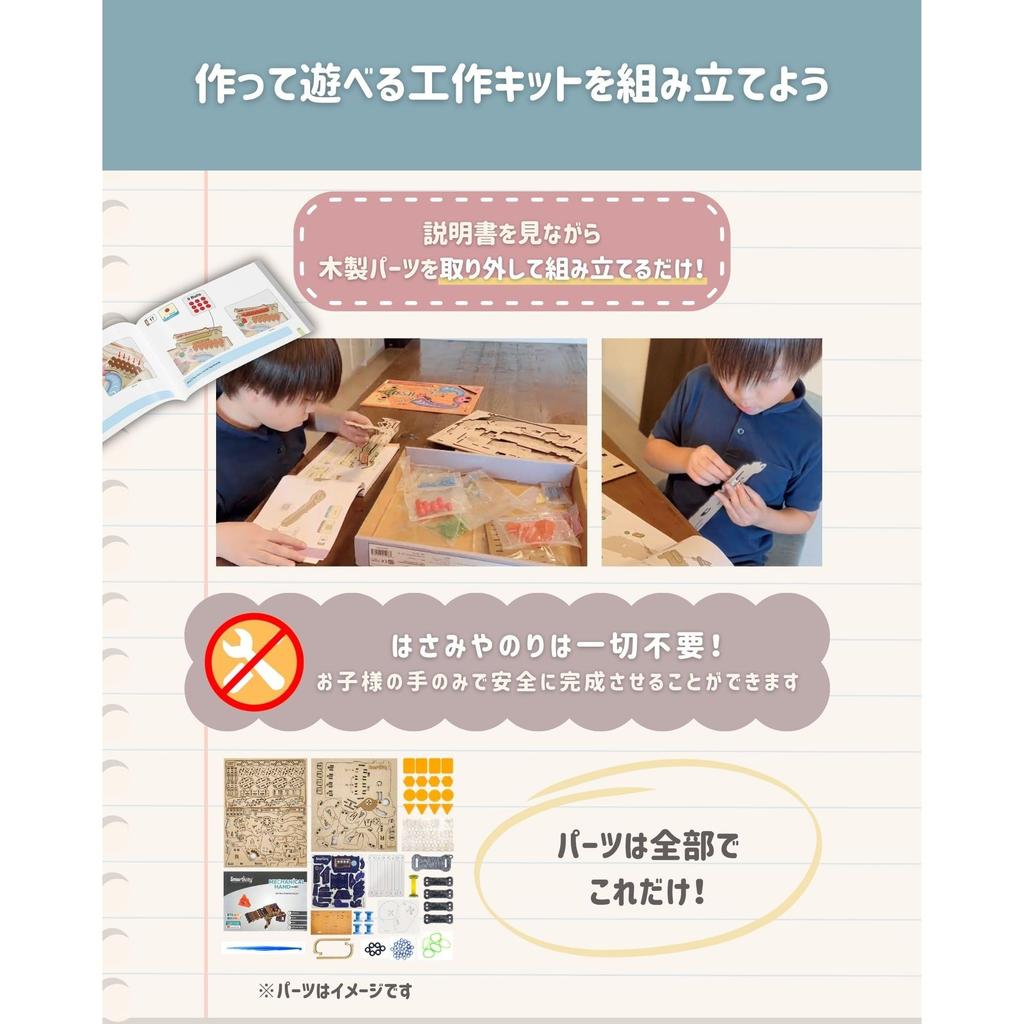
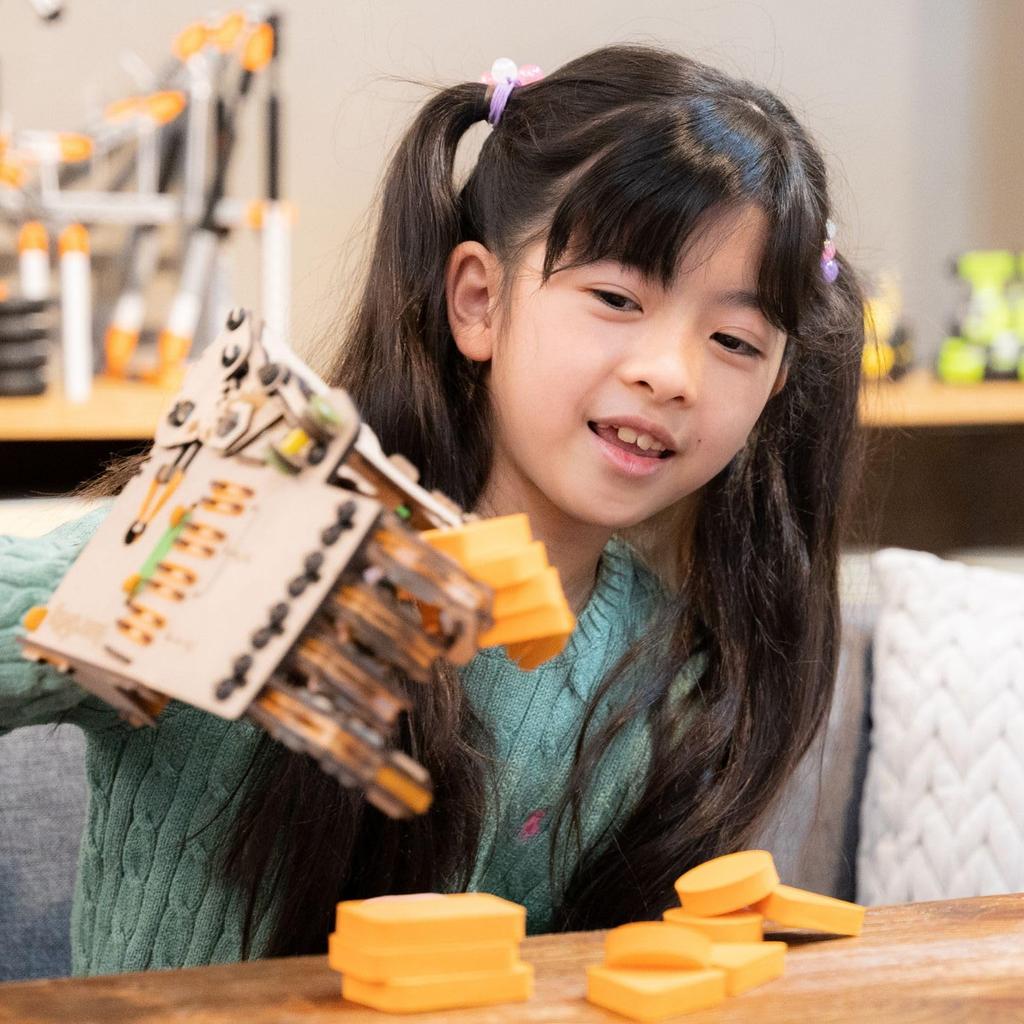
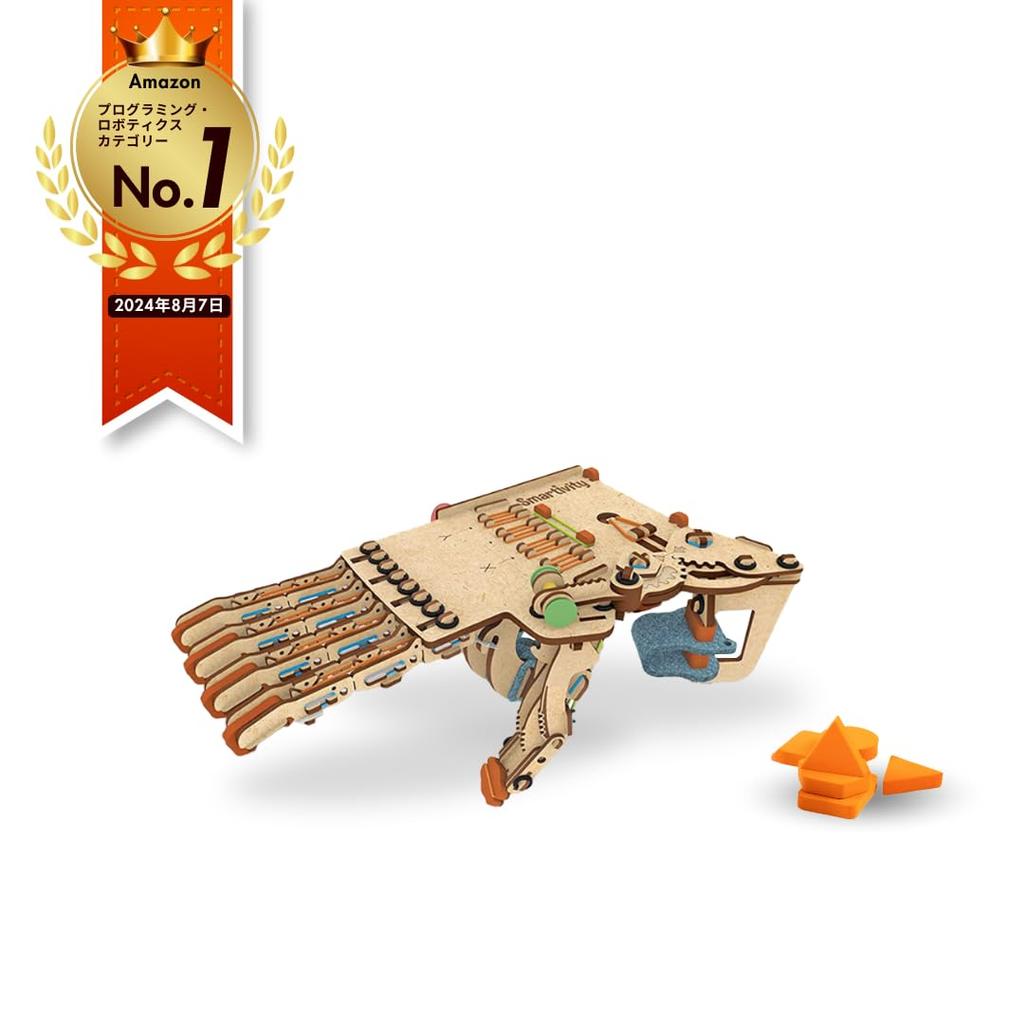
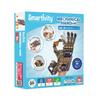
[A craft kit that helps you build and learn the fundamentals of science - perfect for your summer vacation independent research project] The "Freely Movable Robot Hand" is a DIY STEAM educational toy that allows children to learn about the structure of the hand and mechanical structures by assembling and playing with it themselves. There are also many tasks that can be attempted using the completed robot hand, helping to develop concentration through the process of "making" and "playing." The process of making the robot hand will pique children's interest in the structure of the hand, and then by actually experiencing experiments using their own hands, this will further pique their interest and deepen their understanding. For example, taking on various tasks without being able to use their thumbs will help children develop the ability to face difficulties and become aware that there are people in all different situations. This experience will help children develop compassion and empathy for others, broadening their horizons and helping them to grow into well-rounded individuals who can thrive in the future. Furthermore, because the completed robot hand can be handled and moved freely as if it were their own hand, they can have fun thinking up and devising their own ways to play with it, which will also improve their imagination and creativity.
[Play to Develop Creativity and Thinking Skills] By assembling a robotic hand from rubber bands and other parts, children can understand and experience engineering gimmicks. Building it from scratch develops their thinking skills, as well as their mathematical and imaginative abilities to design everything from start to finish. Using their fingers while playing also strengthens their concentration and finger control, developing logical thinking and the ability to think independently and see things through—both essential for learning programming, which requires painstaking, detailed work. The screen-free, non-digital experience of thinking, using their hands, and completing a DIY assembly kit gives children the joy and sense of accomplishment they need, building self-confidence.
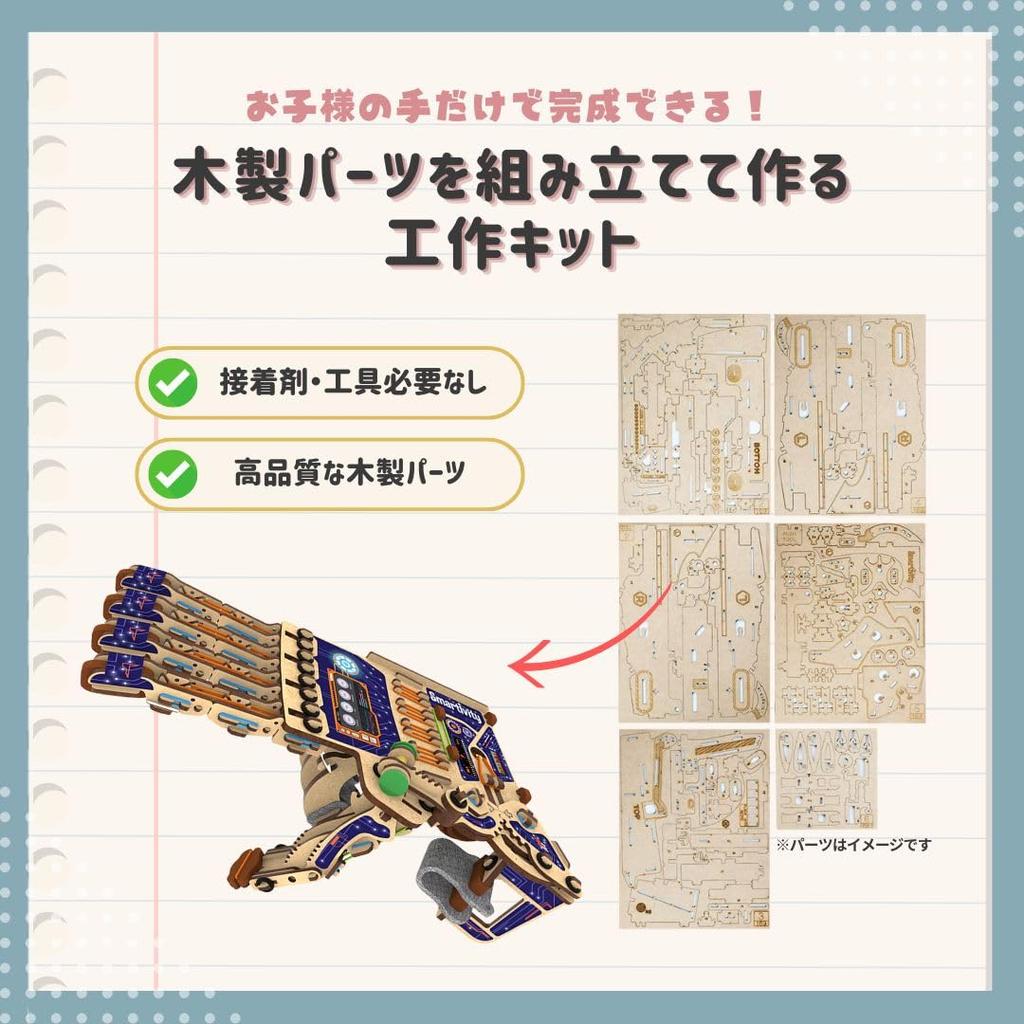
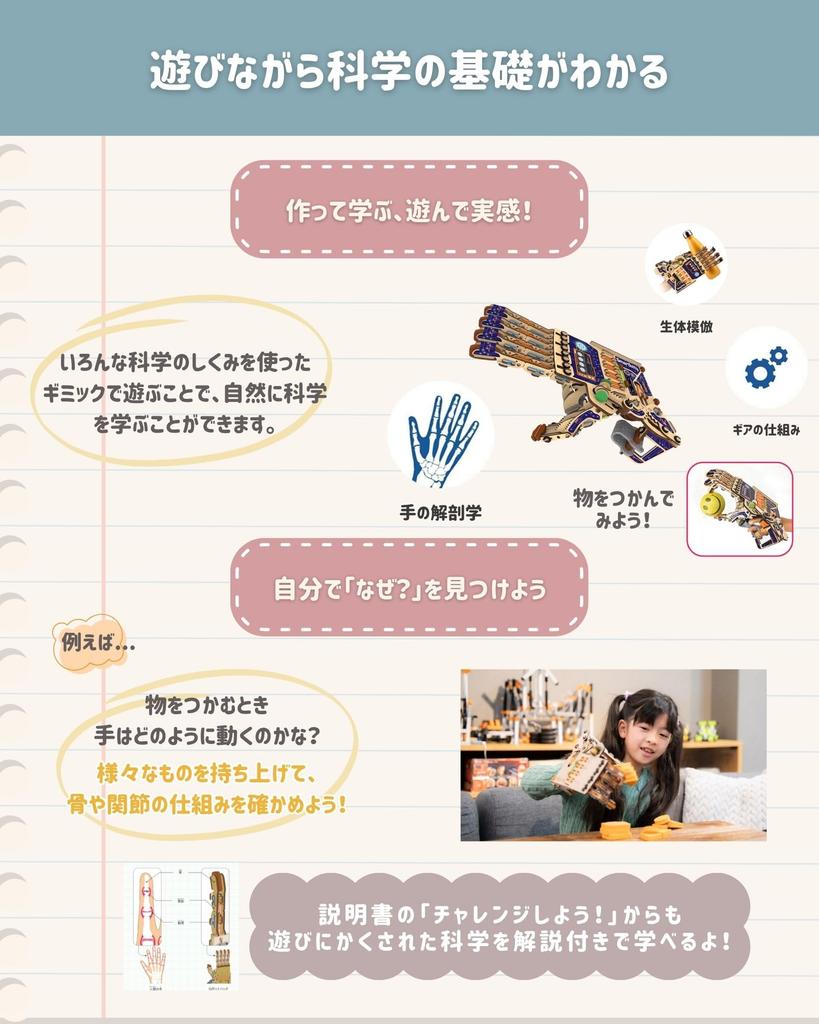
[Experience Anatomy Through Hands-On Learning] This toy recreates the structure of the human hand, allowing children to learn not only about engineering but also about anatomy. By assembling this DIY kit, which replicates the bones, joints, and ligaments, children will understand hand anatomy and develop an interest in the human body. The completed robotic hand can move in the same way as a human hand, allowing them to learn about the structure and mechanical structure of the hand while playing. It also allows them to simulate conditions such as ligament rupture, which are difficult to experience in real life. Learning through play brings anatomy closer to children, and learning about the relationship between engineering and anatomy stimulates their intellectual curiosity and broadens their horizons. Smartivity is an educational toy that meets strict international standards and is certified for physical safety in addition to scientific testing. The MDF parts are shatter-free, allowing children to focus on playing without worrying about injury. Made with durable, long-lasting materials for long-lasting enjoyment, this toy goes beyond assembly and offers a variety of play styles and learning elements, making it a child-friendly and environmentally friendly educational toy.
[Immersive play experiences spark curiosity] This hands-on learning kit sparks interest in engineering through play and serves as the foundation for future STEAM learning. By assembling the robotic hand, children learn about gear mechanisms and linkages. Understanding the role of gears and the function of gear trains (structures combining two or more gears) will inspire interest in familiar machines and structures, fostering the ability to ask questions and apply them to learning. STEAM is an educational concept that combines the initials of five words: Science, Technology, Engineering, Art (arts and liberal arts), and Mathematics. It was born in response to the dramatic changes in the world brought about by the impact of AI (artificial intelligence) and technological innovation. By learning these subjects comprehensively, children will develop the fundamental IT skills and technological development skills that will be essential in the future, as well as the ability to think independently and derive answers logically.
Product Specifications: Size: 33 x 5 x 34 cm, Weight: 1200 g, Material: MDF board (pine wood), Country of Origin: Made in India, Includes Japanese instructions. *The Japanese version is only sold at authorized retailers. Please be careful not to confuse it with the English version.