The Origin of Matsumoto's World! Resurrected with a Lost Work
Leiji Matsumoto, the master who sparked an anime boom across Japan.
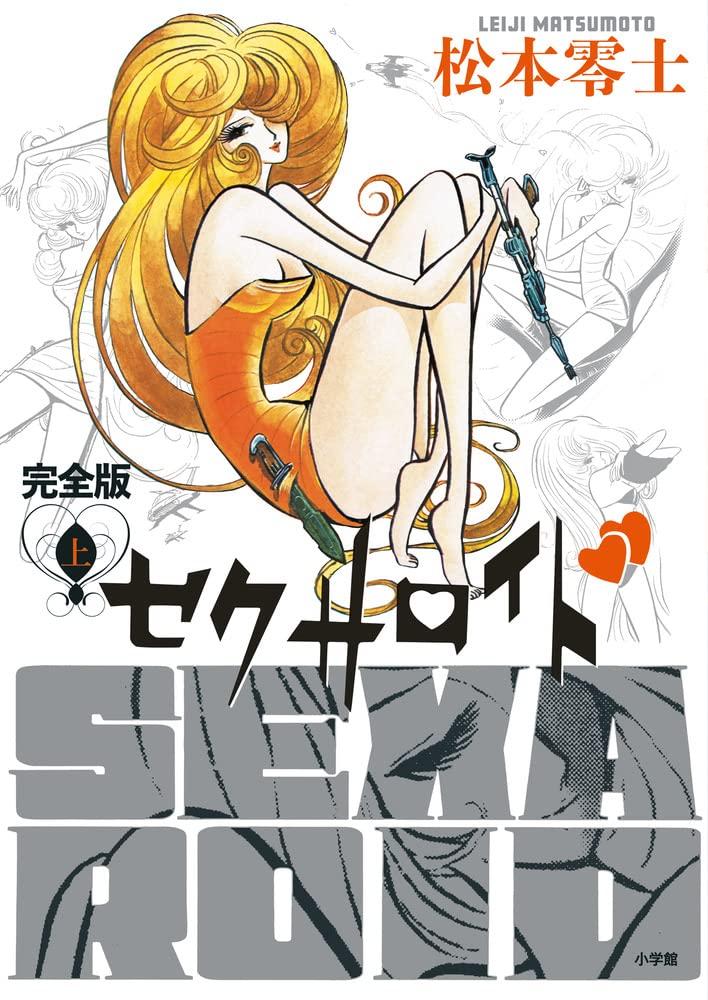
In 1968, Matsumoto, who had been writing primarily for girls' manga magazines, first drew "Sexaroid" for a young men's comic magazine.
This work, said to be the origin of "Matsumoto SF" and "Matsumoto Beauties," is an ambitious work that evokes the energy of a young Matsumoto, exploring and challenging new forms of expression.
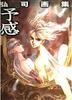
This volume is not just a large-format comic; it is a complete edition that recreates the original color pages in the original colors.
With a B5 size that realistically captures the atmosphere of the magazine,
and a hefty volume of over 400 pages,
it is sure to satisfy even the most avid fans.
Volume 1 includes the first chapter of "New Sexaroid," which was not included in the comics,
as well as a special reprint of the lost first chapter, which was shelved for redrawing when the first volume was released.
Also included is a re-edited interview with Matsumoto from that time. This is also an extremely valuable resource for learning about Matsumoto 50 years ago.
It also includes a special interview with his former assistant, manga artist Kaoru Shintani, in which he shares his memories of that time!
Here's a surprising fact!
A must-have for fans, a must-have book to keep forever!
[Recommended by the Editor]
The work was published in 1968. It's rare for the original color manuscript from the magazine to be reprinted more than 50 years later.
Matsumoto-sensei was 30 years old at the time.
Although she is now known as a master manga artist who sparked the anime boom, at the time there were few magazines that would publish her work, and she mainly wrote for girls' manga magazines.
She was also forced to cede serialization slots to young female authors who were gaining strength, and work gradually began to dwindle.
In an interview, Matsumoto-sensei recalls that boys' manga magazines were crowded with established artists, making it difficult for her to get opportunities and there was no place to publish her work.
Thinking that he'd finally found a place to draw, Matsumoto-sensei jumped at the chance to join the newly launched young men's comic magazine, and it was this young men's comic magazine that became the platform for his growth and allowed him to make great strides.
Because it was a comic magazine aimed at young men, it was expected that Matsumoto-sensei's works would incorporate sexual content.
Matsumoto-sensei has recalled that he was privately criticized by his colleagues for this.
However, he was determined to avoid any sensationalism.
While there is a fair amount of imagery, it is neatly and elegantly put together and doesn't feel obscene.
Moreover, it is completed as a large-scale sci-fi masterpiece, depicting a world that is uniquely Matsumoto-sensei's and fully demonstrating his natural sense.
Another recommended feature of this book is the interview pages.
Volume 1 is written by Matsumoto-sensei's former assistant, Kaoru Shintani,


 Vrácení peněz při nedoručení