Liszt Organ Works - LIC Habikino's Felsberg Organ -


 Vrácení peněz při nedoručeníZáruka kvalityBezpečná logistikaOchrana soukromí
Popis
Introduction
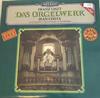
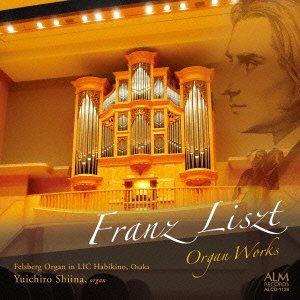
[Piano x Orchestra = Organ!?] Composer Liszt was a piano virtuoso known for his rich acoustics and for creating symphonic poems, such as "Les Preludes," filled with the colorful charm of orchestral works. His organ works, which combine Liszt's keyboard music with the diverse timbres of the orchestra, are bound to be fascinating! This album includes original works such as his greatest organ work, "Fantasia and Fugue on the Chorale 'Ad Nos, Ad Saltarem Undam,'" as well as arrangements by Wagner, Chopin, and Mozart, perfect for introducing you to Liszt's organ. For Liszt's works, renowned Japanese organist Yuichiro Shiina selected the Swiss organ from Felsberg, boasting 3,033 pipes and 43 stops, reproducing the delicate nuances of late Romantic music in exquisite detail. This masterpiece, installed at LIC Habikino Hall M in Osaka, now shines brightly! Total playing time: 78'23" Recorded at LIC Habikino Hall M (Osaka), December 27-29, 2011 Instrument: Pipe organ (manufactured by Felsberg, Switzerland) 3-stage manual pedal, 43 stops Total number of pipes: 3,033 256 general combinations Mechanical register/combination switch Tuning method: 442Hz = 23rd System J-M Tricoteaux 2000 Designed and built by Orgelbau Felsberg AG (Switzerland) Assembly and voicing by Orgelbau Felsberg AG (Switzerland) Yamaha Corporation Combination Yamaha Corporation 《Record Geijutsu Special Selection (June 2013 Issue)》
Media Reviews and More
The organ being performed is a Swiss Felsberg organ at LIC Habikino Hall in Osaka. It's versatile and exquisite, and even the booklet cover shows its beauty. The pieces performed include three of Liszt's most iconic works: "Variations on Bach's Cantata 'Cry, Lament, Sorrow, Tremble,'" "Prelude and Fugue on a Theme B-A-C-H," and "Fantasia and Fugue on the Chorale 'Ad nos, ad saltarem undum.'" Shiina delivers these powerful pieces with a dignified and powerful performance. From blaring, thunderous tones to gently floating soft tones, Shiina's varied volume and tone expressively highlight the true potential of Romantic organ music. If the above constitutes the "main course," the remaining pieces—originally piano pieces like "Consolation No. 4 in D-flat major," Mozart's "Ave Verum Corpus" (Choral), Chopin's "Preludes" Nos. 4 and 9, and Wagner's "Pilgrim's Chorus" (from "Tannhäuser")—are each flavorful "side dishes," complementing each other and enriching this worthy meal. --Shigero Hamada (Record Geijutsu, June 2013 issue)
Few people truly understand Liszt's side as a composer of religious music and organ music. This performance offers a rich glimpse into the "unknown Liszt." Shiina's exceptional technique and controlled tone, combined with the use of an instrument with a third keyboard, produce the ideal sound Liszt would have sought. --Shinnosuke Nagai (CD Journal, July 2013)
The increasingly acclaimed and talented Yuichiro Shiina carefully selects the instrument most suited to each piece. This time, he chose the Swiss-made organ installed at LIC Habikino. This instrument is capable of expressing subtle nuances in dynamics and tone, making it particularly suited to 19th-century works. Rather than simply confronting Liszt himself, he captures Liszt's ideal image of Bach in the work. This is perhaps one of the results of Shiina's ongoing performance of all of Bach's organ works. Meanwhile, in his arrangements, he uses the organ as a medium to subvert the image of the work itself. This album offers the feeling of peering into a microcosm. --Kazuto Sasada (Brave, June)
About the Artist
[Yuichiro Shiina (Organ)] Graduated from the Tokyo University of the Arts, Faculty of Music, Department of Instrumental Music, with a major in organ. He also completed a Master's program at the same university's Graduate School of Music. He studied organ with Ikeda Izumi and Hirono Tsuguo, basso continuo with Imai Naoko, and harpsichord with the late Kojima Yoshiko. While a student, he received a Spanish government scholarship to attend the Salamanca Organ Academy. He has won numerous international competitions, including first place at the NDR (North German Radio) Music Award International Organ Competition in 2002, a prize at the 1st Symphony Hall Organ Audition in 1994, second place at the 1st Dallas International Organ Competition in 1997, and third place at the 12th Leipzig Bach Competition in 2000. In October 1999, he received an Austrian government scholarship and a ROHM Music Foundation scholarship to study at the University of Music and Performing Arts Vienna, where he studied organ with M. Radulescu and harpsichord with G. Murray, graduating with unanimous honors. With a grant from the Yasuda Life Quality of Life Cultural Foundation, he studied at the Schola Cantorum Basel in Switzerland. He studied organ and harpsichord with J.-C. Zehnder, basso continuo with J.-A. Bötticher, and ensemble with A. Lurie. In 2001, he participated as a harpsichordist in the Austrian Jeunesse Orchestra's performance at the Schauspielhaus in Berlin, where he received rave reviews. From 2002 to March 2007, he planned concerts and lectures as the resident organist at Toyota City Concert Hall. Since 2005, he has conducted a 10-year series of concerts of all of J.S. Bach's organ works. He has also released the highly acclaimed CDs "Anatomy of Bach's Organ," "Recommendations for Organ Music," "Prayer for Peace," "The Beginning of the Organ," and "New Discoveries! Bach's Organ Art" through Kojima Recording. Currently, she performs in Japan and throughout Europe, including Germany and Switzerland. She is an associate professor and school organist at Kwassui Women's University, a part-time lecturer at Tokyo University of the Arts, and organist at Kichijoji Church, United Church of Christ in Japan.