[JOOM Certified Store | Japan]
Quality products from Japan, shipped safely to your destination.
[Important Notice]
Items are made for the Japanese domestic market:
- Products: Official Japanese market items (Manufacturing origin varies by model).
- Voltage: AC 100V / Type A plug (Voltage converter may be needed).
- Language: Japanese by default (Unless specified in title/images).
- Region: Please check system compatibility before ordering.
Follow our shop for new arrivals! Please leave a review when your item arrives.
―・―・―・―・―・―・―・―・―・―・―・―・―
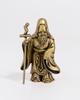
Series: Seven Lucky Gods (Pure Gold Plated)
Body size: H8.5 x W5.2 x D3.5cm Weight: Approx. 352g
Material: Alloy (modeled by Buddhist sculptor Shuun Makita) with pure gold-plated finish [Takaoka Copperware / Made in Japan]
◆Product contents: Main body + cane in gift box
[Longevity, Success in Life] This immortal became a deity in Chinese Taoism and is said to have lived for thousands of years. His name means "happiness," "status," and "lifespan." He has a long head, a long beard, and carries a staff with a scroll tied to it.
[Longevity, Success in Life] Fukurokuju is one of the Seven Gods of Fortune, beloved as gods of good fortune and prosperity. He is a Taoist immortal who is said to have lived for thousands of years. His name means "combining happiness," status, and longevity. He is depicted with a head, a long beard, and a staff with a scroll tied to it. The Seven Gods of Fortune are surprisingly little-known, but they are actually made up of gods and Buddhas from India, China, and Japan. Belief in the Seven Gods of Fortune began in the late Muromachi period and is said to have become widespread among the common people by the mid-Edo period. Subsequently, customs such as pilgrimages to the Seven Gods of Fortune and treasure ships were born, and today they are beloved as charming and auspicious gods and Buddhas.


 Vrácení peněz při nedoručení