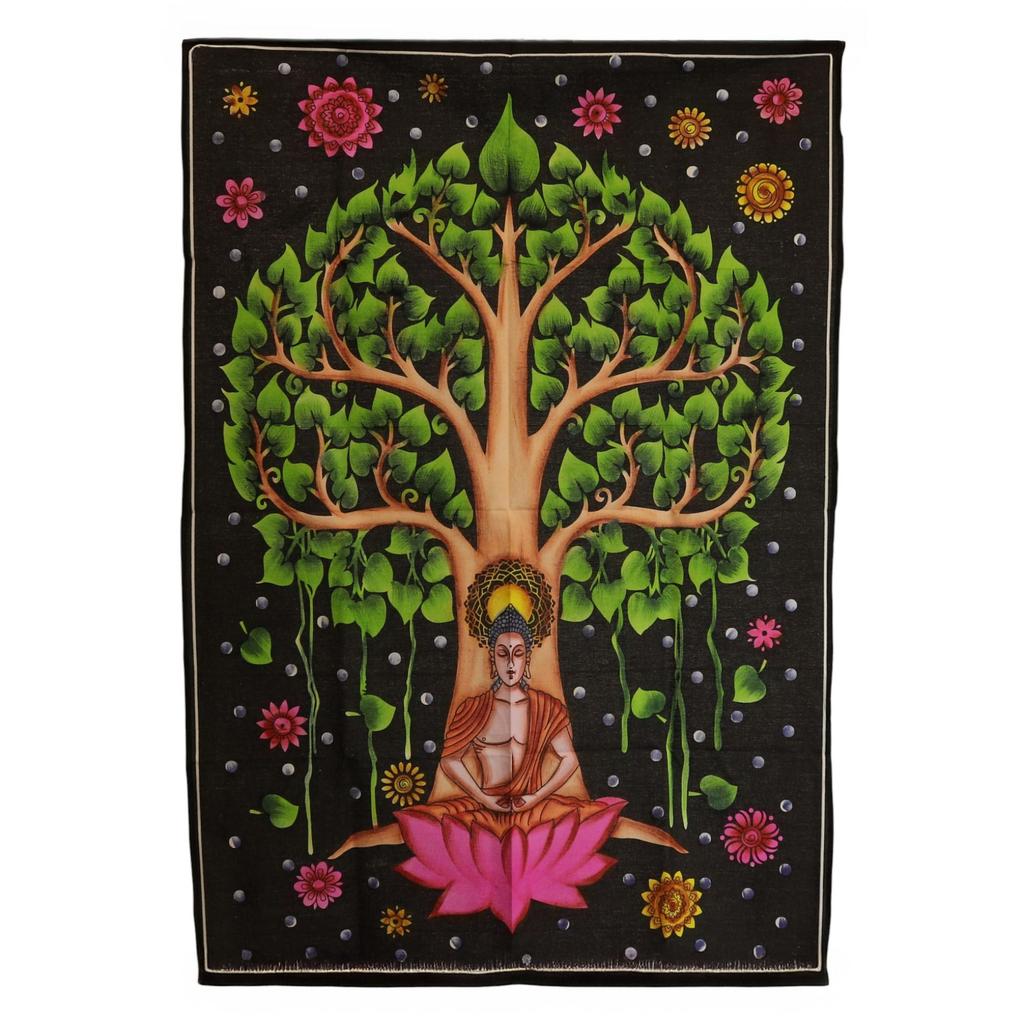
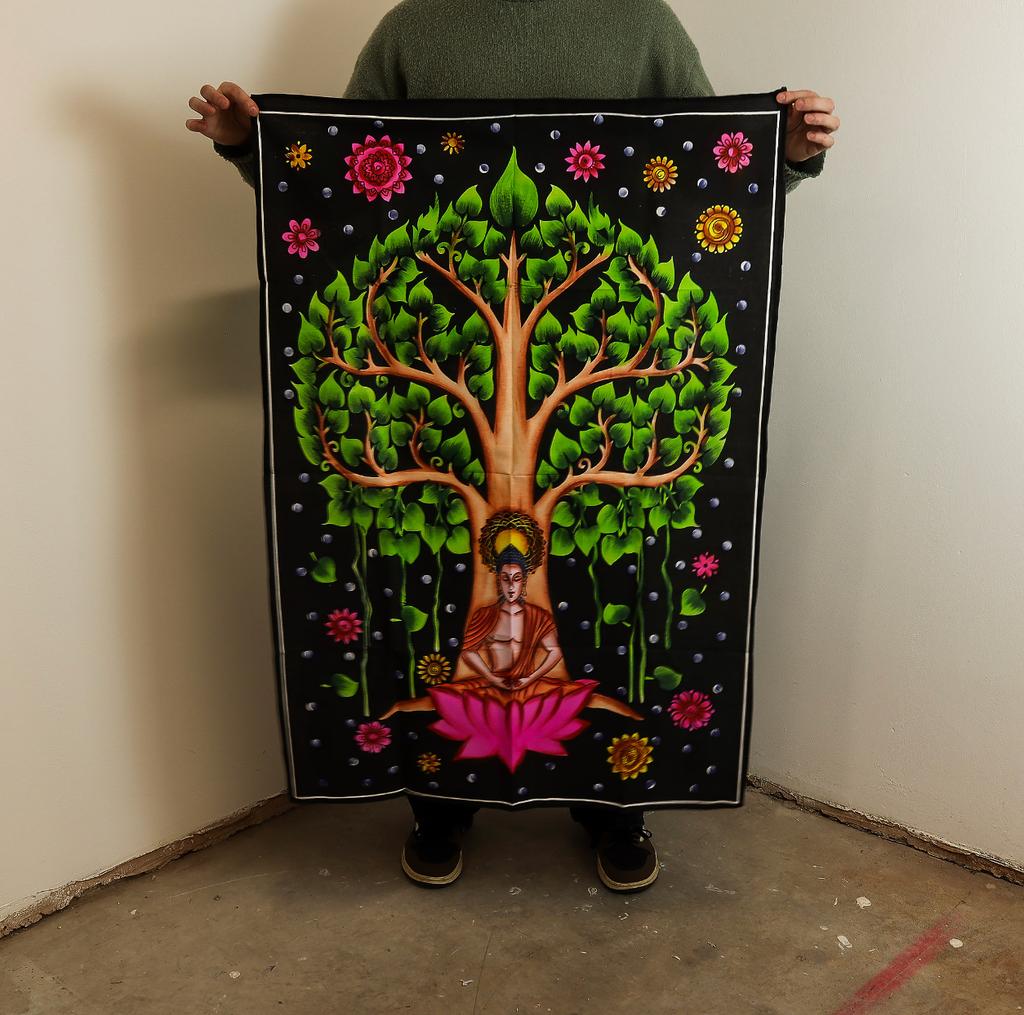
A screen-printed cotton wall hanging showing the Buddha seated in meditation beneath the Bodhi Tree. Rich greens, pinks, and warm tones on a dark background. This is the most specifically religious design in the wall art range — it depicts a named figure from a named tradition in a scene that refers to a particular historical event: the Buddha's enlightenment at Bodh Gaya. Where other hangings in the range borrow loosely from spiritual traditions or use symbols in a decorative context, this one commits. 70cm wide by 110cm tall, 95 grams, made in India.
What's Here
The Buddha sits in a classic meditation posture beneath the spreading canopy of the Bodhi Tree. The composition is vertical — trunk behind the figure, branches and foliage filling the upper portion, the seated figure grounding the lower half. It's a traditional arrangement: the tree shelters; the figure is still. If you've seen Buddhist temple art, thangka paintings, or illustrated sutras, the posture and composition will be immediately familiar.
The colour palette mixes greens (foliage, natural world) with pinks and warm accents (the figure, decorative details). It shares the green emphasis of the Elephant & Tree of Life hanging, but the pinks add warmth that the Elephant design's cooler blues don't have. The overall impression is lush rather than cool — more garden than forest.
The dark background pushes the figure and tree forward and gives the scene a sense of enclosure. This is consistent with the enlightenment narrative itself — the Buddha sat through the night, and the moment of awakening came at dawn. Whether the dark background is intentionally referencing this or simply a design choice, it gives the hanging a contemplative quality that a lighter ground wouldn't.
The decorative treatment is Indian in style — ornamental patterning on and around the figure, detailed foliage, layered colour. This isn't a minimalist or modernist interpretation. It sits within the broader tradition of Indian devotional and decorative art where richness of surface detail is a mark of care and reverence.
Of the figurative hangings in the range, this is the most explicitly devotional. The Chakra Earth Connection shows a generic meditation silhouette with no named tradition. The Sun Goddess shows a stylised feminine figure without specific religious identity. The Elephant & Tree of Life is ornamental Indian art without a religious scene. This hanging names its subject: the Buddha, the Bodhi Tree, the moment of enlightenment. That specificity is either exactly what someone wants or a reason to choose a different design.
Screen-Printed Cotton
Lightweight cotton, hemmed edges, screen-printed on one side. The figurative detail — the Buddha's posture, facial features, hand position, and surrounding ornamentation — requires precise registration across multiple colour layers. The pinks and greens are applied as flat and graduated areas. The reverse shows a faded impression on natural cotton. Uncoated, unlined.
Placing and Looking After It
No hardware included. Pins, tacks, adhesive hooks, or clips at 95 grams.
Context matters more with this hanging than with most others in the range. A mandala or geometric pattern can go anywhere without raising questions about intent. A depiction of the Buddha in meditation invites interpretation — is this a meditation space, a Buddhist household, an appreciation of Indian art, or purely decorative? None of these are wrong, but the hanging will prompt the question in a way that abstract designs don't. Place it where the answer feels comfortable.
Natural settings include meditation rooms, yoga spaces, quiet bedrooms, reading corners, and any space already oriented toward stillness or contemplation. The greens and pinks integrate easily with natural and warm-toned interiors. In a room that already contains plants, wooden furniture, or warm textiles, the hanging will feel like an extension of the existing palette rather than an addition to it.
Hand wash gently in cold water if needed. Do not machine wash. The pinks are the most fade-vulnerable colours here — they'll soften first under sustained UV. The greens will hold longer. Iron on the reverse at low heat to remove delivery creases.
Under the Tree at Bodh Gaya
The scene on this hanging refers to one of the most frequently depicted moments in Buddhist art. The historical Buddha — Siddhartha Gautama, born a prince in what is now southern Nepal around the 5th century BCE — is said to have attained enlightenment while meditating beneath a Ficus religiosa tree at Bodh Gaya, in present-day Bihar, India. He sat through the night, faced temptations and challenges, and at dawn reached the understanding that ended the cycle of suffering. That tree became known as the Bodhi Tree — bodhi meaning "awakening" in Pali and Sanskrit.
The


 Vrácení peněz při nedoručení