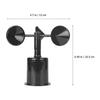
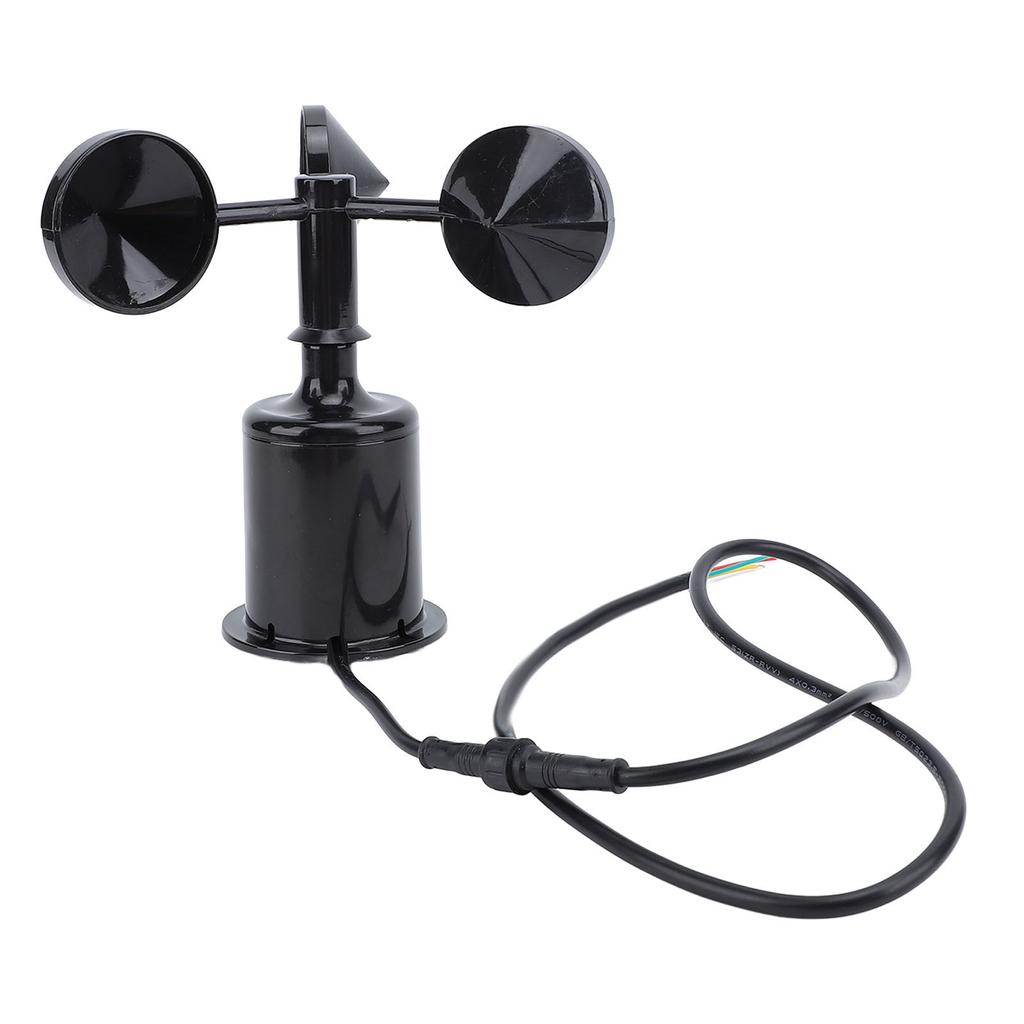
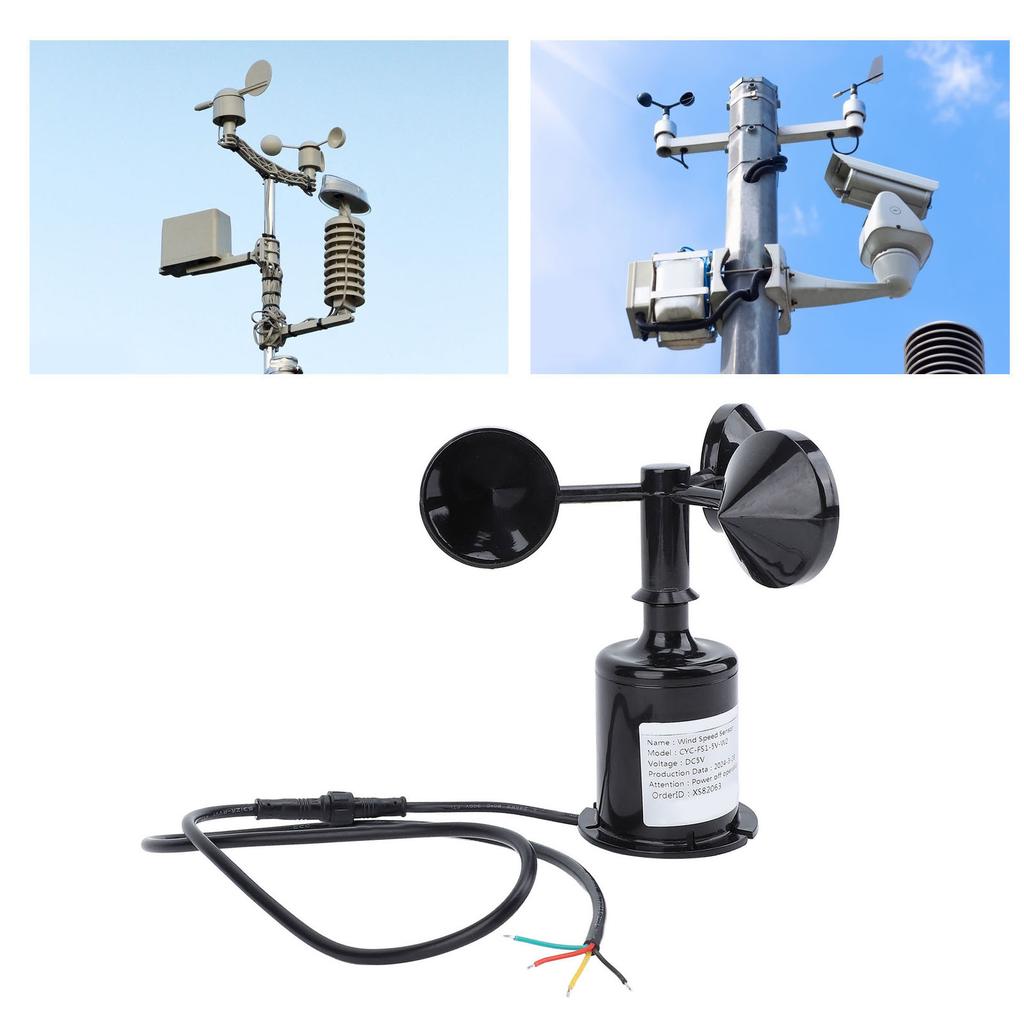
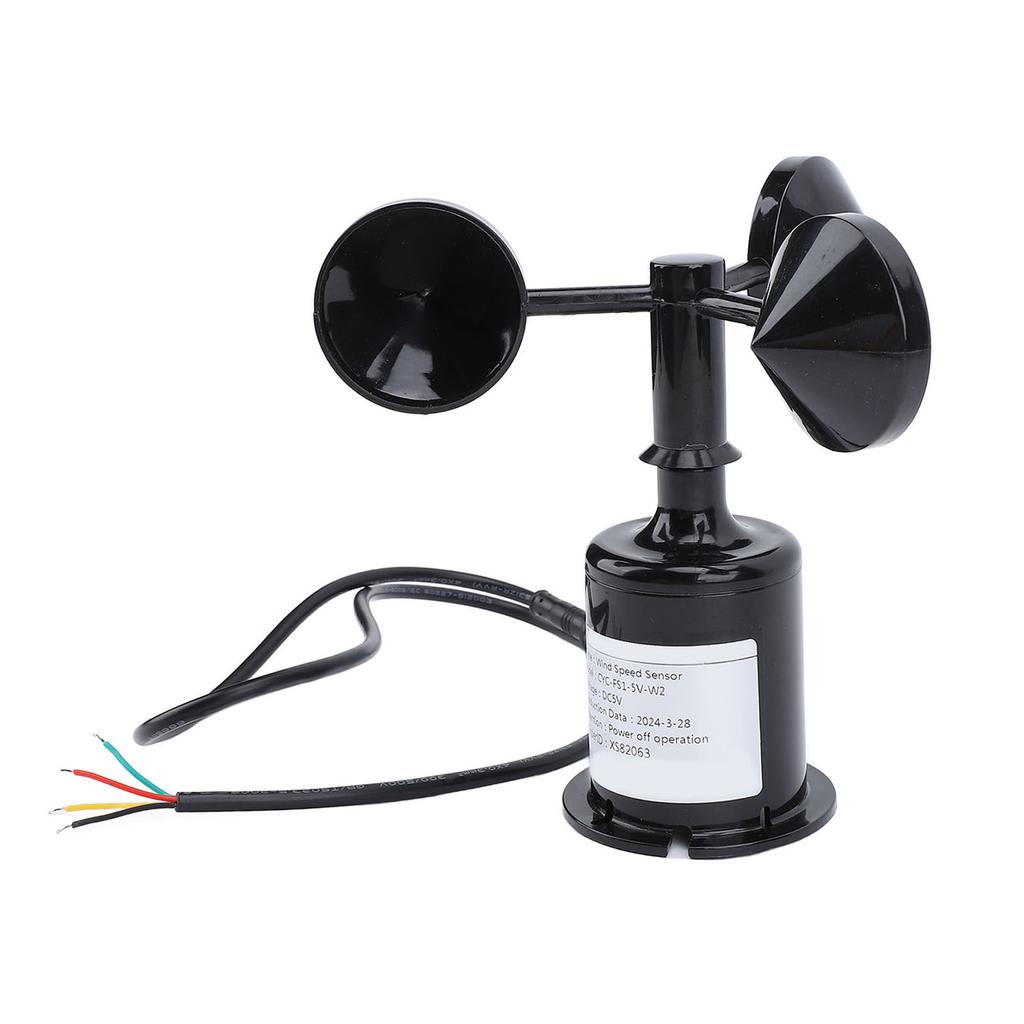
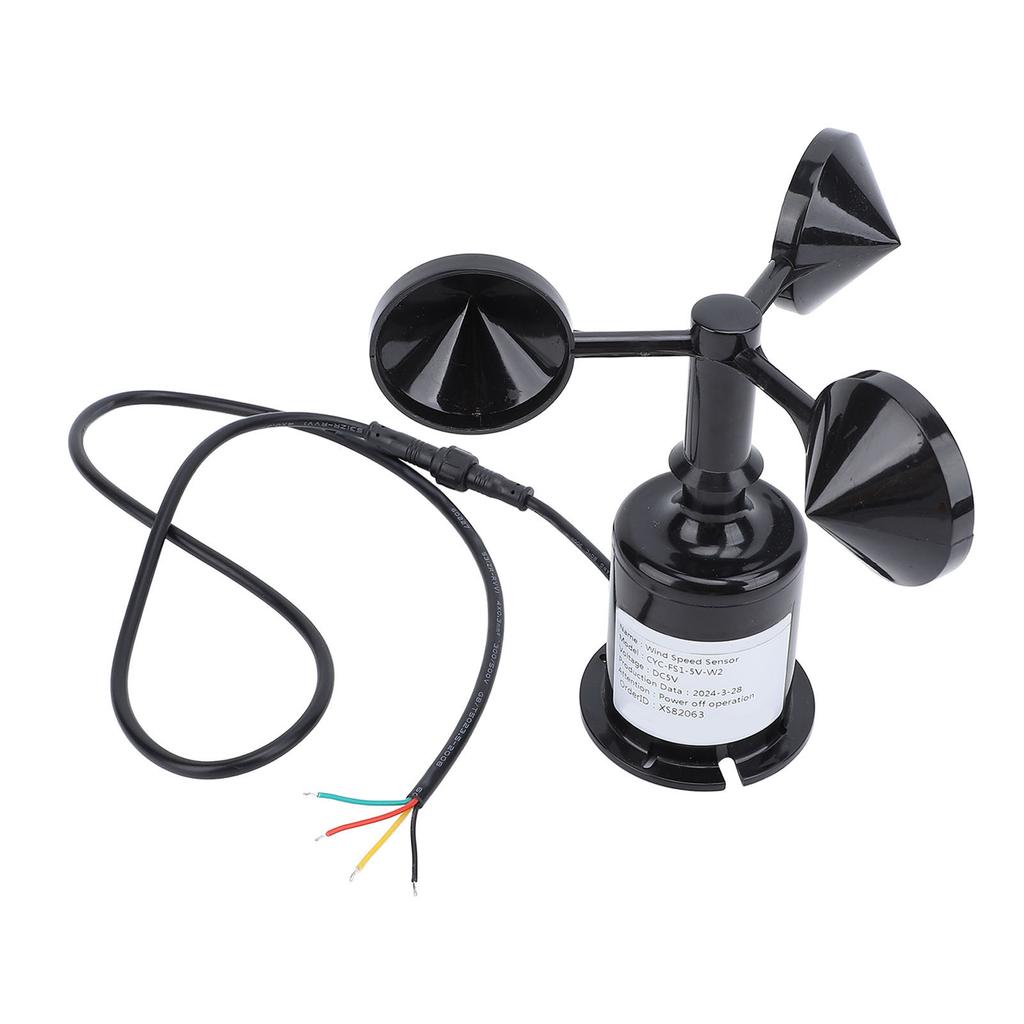
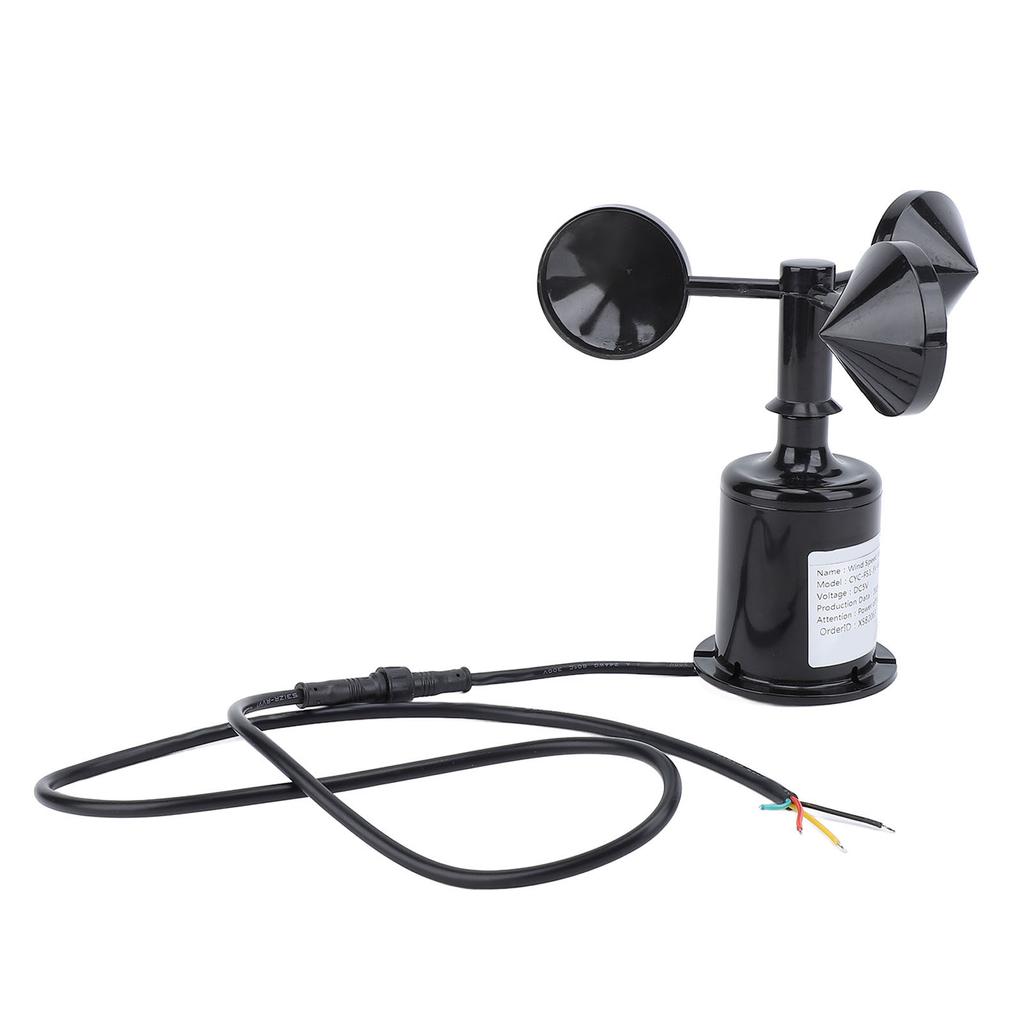
Premium Material: Wind speed monitoring sensor is made of premium ABS material with high strength, low startup wind speed and service life. Stable performance and strong stability.
Anti Interference: Wind speed monitoring sensor has strong anti interference ability, IP64 waterproof design, compact and lightweight, easy to carry and assemble.
Outlet Mode: Anemometer sensor is compatible with two outlet modes, bottom outlet and side outlet. Easy to connect, save time and energy. Applicable to s, industry and agriculture.
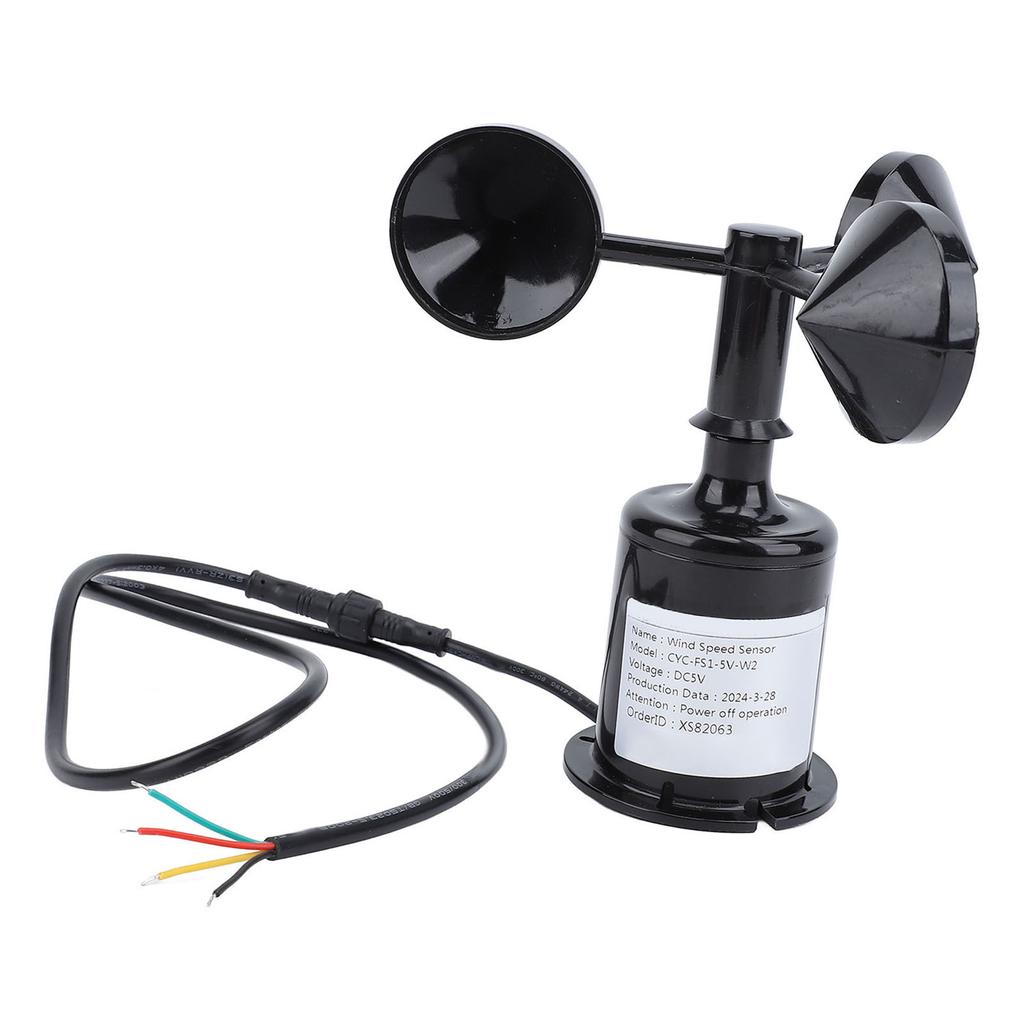
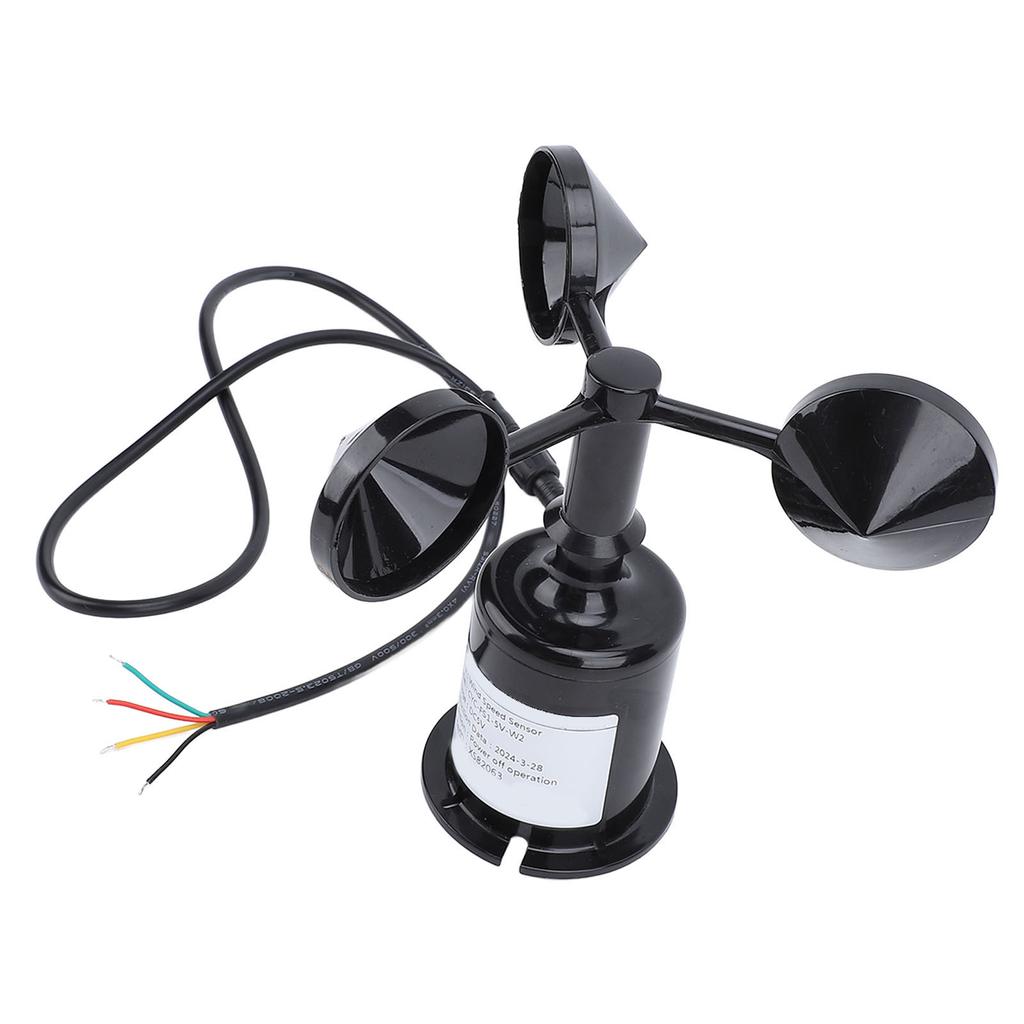
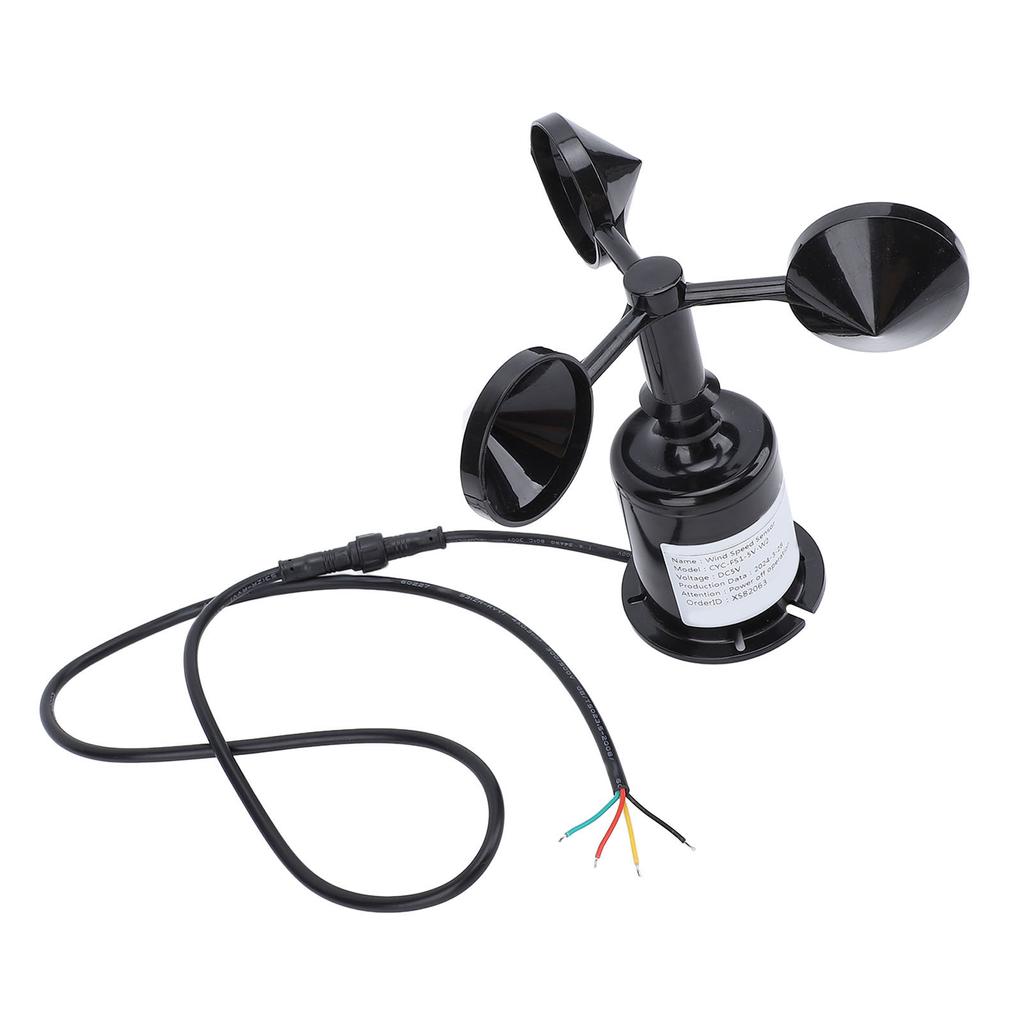
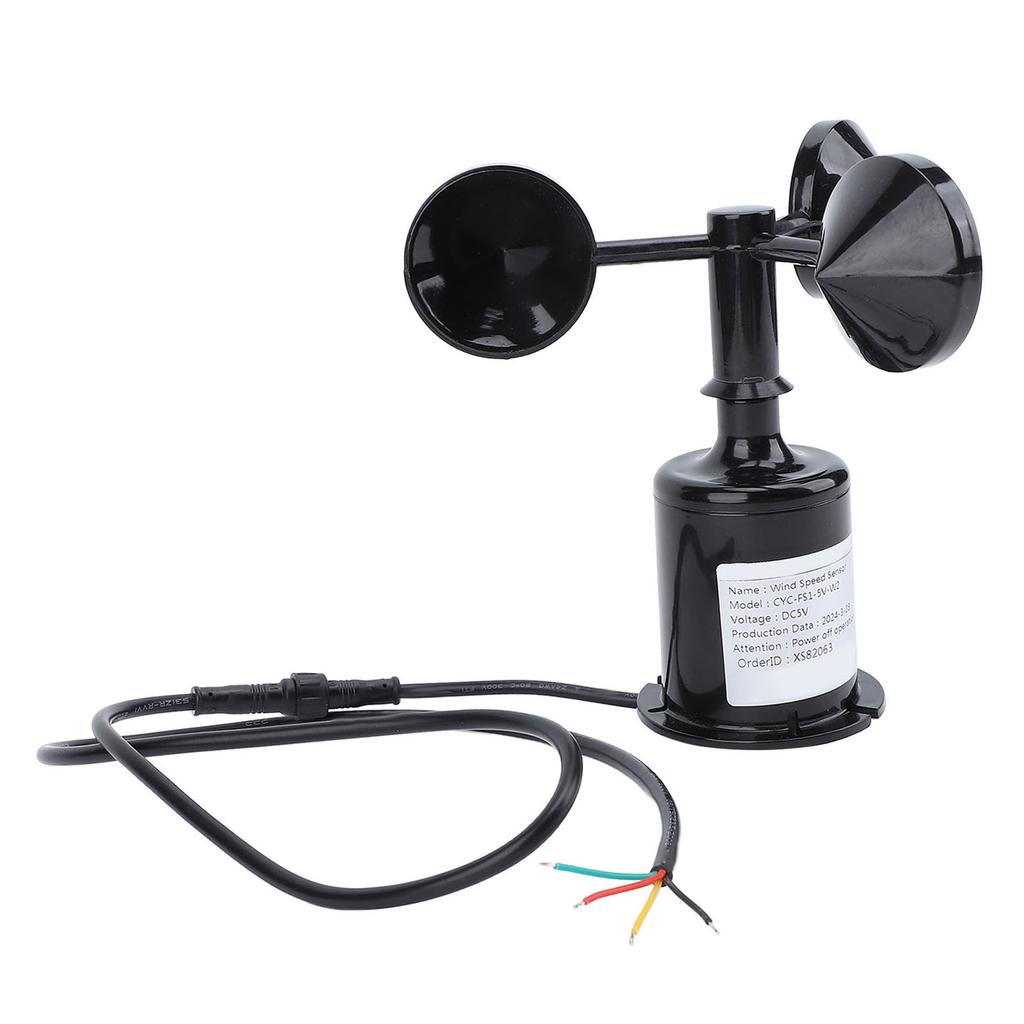
Item Type: Wind Speed Monitoring Sensor
Material: ABS
Product Size: Approx. 158x180x70mm Celsius 6.2x7.1x2.8in
Supply Voltage: 5V
Communicating Type: (Default for Protocol)
Measuring Range: Wind Speed 0‑45mCelsiuss
Extension Line Length At Connection: 0.8 Mete Celsius2.6ft
Accuracy: +Celsius- (0.5+0.02V) MCelsiuss (V Represents The Real Time Wind Speed Value)
Resolution: 0.1mCelsiuss
Start Up Wind Speed: less than 0.8mCelsiuss
Maximum Power Consumption: 0.48W
Load Capacity: 12V Power Supply, Current Type Output Impedance less than 350 Ohm
24V Power Supply, Current Type Output Impedance less than 900 Ohm , Voltage Type Output Impedance more than 1K Ohm
Operating Environment: Temperature ‑35 celsius to 60 celsius , Humidity less than 100.0% Without Condensation
Protecting Grade: IP64
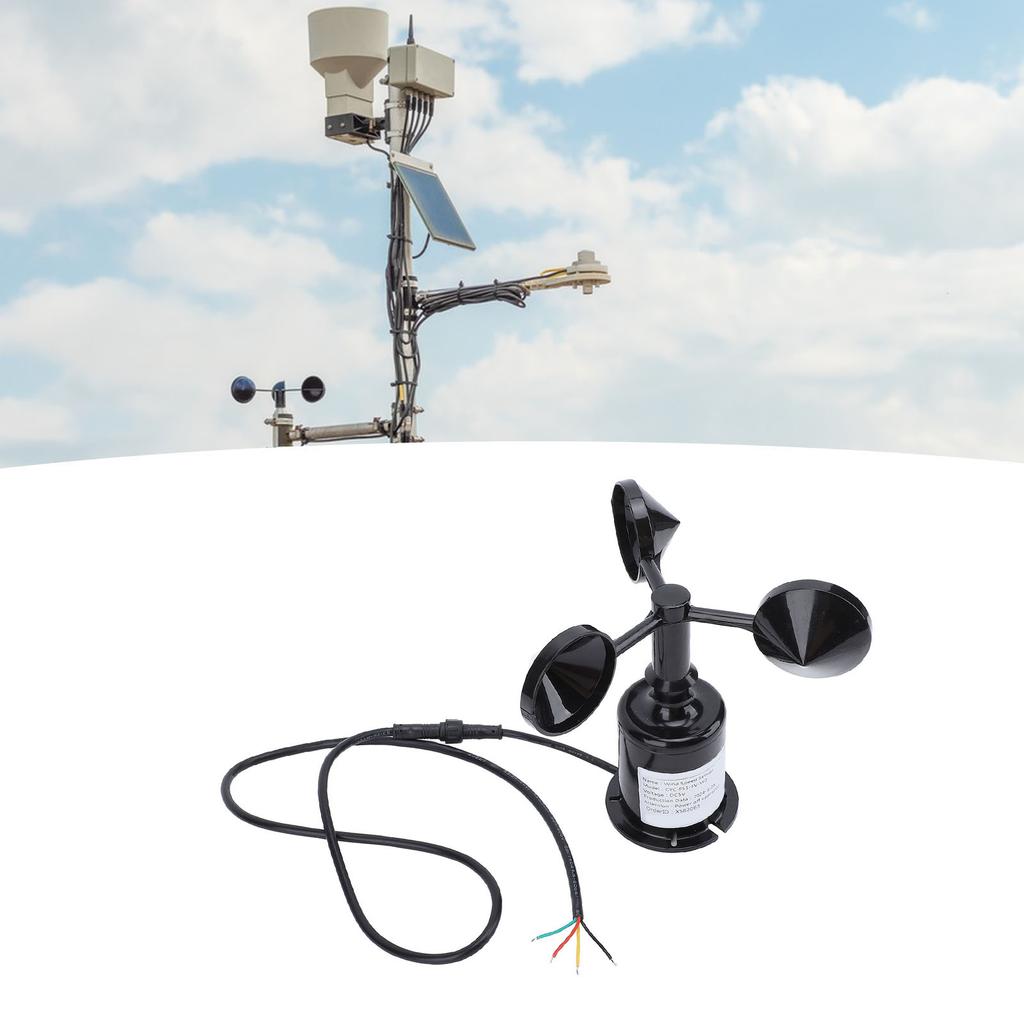
Widely Used In: Greenhouse, Environmental Protecting, Ships, Docks, Breeding, Advertising Gates, Meteorology, Marine, Environment, Airports, Ports, Laboratories, Industry and Agriculture and Transportation and Other Environments of Wind Speed Measurement.
Note about the sensor communicating protocol:
Fi t, if you are using a single sensor connected to the computer to read data directly, it is recommended to use the company s private protocol (see page 3), you can visualize the data in ASCII (hex send, non hex receive);
Second, if you are a multi sensor interconnection with PLC, configuration or programmable collector, it is recommended to use the standard for RTU protocol.
Third, if there is no special requirements, the sensor paramete in the device address default 1, baud rate = 9600, the protocol for RTU.
Standard for RTU protocol:
Serial Port Format:
Data bit 8 bits, stop bit 1 bit, parity bit None, default baud rate 9600bps, serial debugging software set to hex send and receive, two communicating intervals of at least 500ms or more, CRC in the specification for the parity bit, 2 bytes. The device address is 1 by default.
For CRC checksum steps :
1. Preset the 16 bit register to hexadecimal FFFF, call this register as CRC register;
2. Isolate the fi t 8 bit data with the lower bit of the CRC register and put the result in the CRC register;
3. Check the lowest bit by ing the contents of the register one bit to the right (towards the lower bit) and filling the highest bit with a 0;
4. If the lowest bit is 0: repeat step 3 ( again) if the lowest bit is 1: the CRC register is iso orthogonal to the polynomial A001 (1010 0000 0000 0001);
5. Repeat steps 3 and 4 until it is ed right 8 times so that the entire 8 bit data is all processed;
6. Repeating steps 2 through 5 for the 8 bit data;
7. The last CRC register obtained is the CRC (the CRC obtained is low before high after).
Wiring (wire respectively):
Red: Power positive
Black: A+
Yellow: B-
Green: Power negative
Distribution Diameter: 63mmCelsius2.5in
Installation hole diameter: 3.2mmCelsius0.13in
Aerial plug diameter: 15mmCelsius0.6in (it is recommended to reserve 25mmCelsius1.0in for easy wiring, fi t wiring, then install the fixed sensor)
Troubleshooting:
1. The wind blade does not rotate properly and has a large hysteresis. There is foreign matter or jammed in the bearing due to term use. Please send the sensor back to the company for processing;
2. Instrument display value is not correct when output. Possible wiring problems or co


 Vrácení peněz při nedoručení