Description
【Gibeon】
・Japanese Name: Iron Meteorite
・Origin: Africa (Namibia)
・Description, History, and Legend
Gibeon is an iron meteorite (meteorite) mainly composed of iron and nickel, discovered in 1936 in Gibeon, Namibia (southern Africa). It is believed to have fallen to Earth approximately 450 million years ago. In Japan, meteorites have been considered to represent divine will and have been used as sacred objects or in Shinto rituals and festivals.
Meaning: ・Strengthens stones ・Improves perception and problem-solving abilities
【Magatama】
Magatama are one of the jewels that developed uniquely in Japan and are considered one of the Three Sacred Treasures. Magatama made from processed bones and shells have been unearthed from the Jomon period, and amazonite magatama have been discovered from the Mumon Jomon period (6th to 3rd centuries BC). The Kojiki and Nihon Shoki describe the offering of magatama (comma-shaped beads) to Amaterasu, the goddess of Japanese mythology.
There are various theories about the shape of the magatama, such as it being modeled after a fetus, the moon, or an animal's tooth, but nothing is definitively known.
However, based on excavated examples and historical documents, it seems that it had a uniquely Japanese religious meaning, representing protection by borrowing the power of nature and spirits.
Although this magatama culture is believed to have disappeared with the arrival of Buddhism, magatama are still sold as amulets at Shinto shrines that enshrine deities belonging to Shintoism.
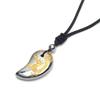
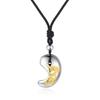
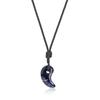
Magatama size: Approximately 20mm in length, 13mm in width, and 5mm in thickness.
Material: Gibeon meteorite, Karen silver (97% silver purity)
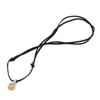
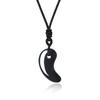
Description: This is a magatama pendant made of Karen silver and Gibeon meteorite. With a history spanning thousands of years, the magatama has the meaning of an amulet that protects the wearer by borrowing the power of nature and spirits. Note: It uses a waxed cord approximately 80 cm long, and the length is adjustable, making it a design that anyone can easily wear.
![[World Accessories Carmelo] Gibeon Magatama Space Meteorite Pendant Choker for Men and Women](https://img.joomcdn.net/71b59faf240e415d6b4dd86dbce0ce458f9606e4_1024_990.jpeg)
![[World Accessories Carmelo] Gibeon Magatama Space Meteorite Pendant Choker for Men and Women](https://img.joomcdn.net/ff4b34267b9e2a9d400a42bb5915ce31b124d9df_original.jpeg)
![[World Accessories Carmelo] Gibeon Magatama Space Meteorite Pendant Choker for Men and Women](https://img.joomcdn.net/3f0912f37b687fa27eb5f155dc9fa4451bfca8e4_original.jpeg)
![[World Accessories Carmelo] Gibeon Magatama Space Meteorite Pendant Choker for Men and Women](https://img.joomcdn.net/43a5dd909b3a0dcdf123fecf40279e8e31eefae5_1024_641.jpeg)


 Vrácení peněz při nedoručení




![[J6959] - Hnědý stříbrný náhrdelník 'Kilimanjaro'](https://img.joomcdn.net/b347b5751fbf7790d9342968d0a7d75481d3171f_100_100.jpeg)
![Náhrdelník s dvojitým peřím, náhrdelník s přívěskem z peří a křídel, dlouhý kožený provázek, doplňky, den [Richapex], pánský, pánský, pro otce](https://img.joomcdn.net/586ac50747fa4f85cde10a4d30337252d0da6a9e_100_100.jpeg)