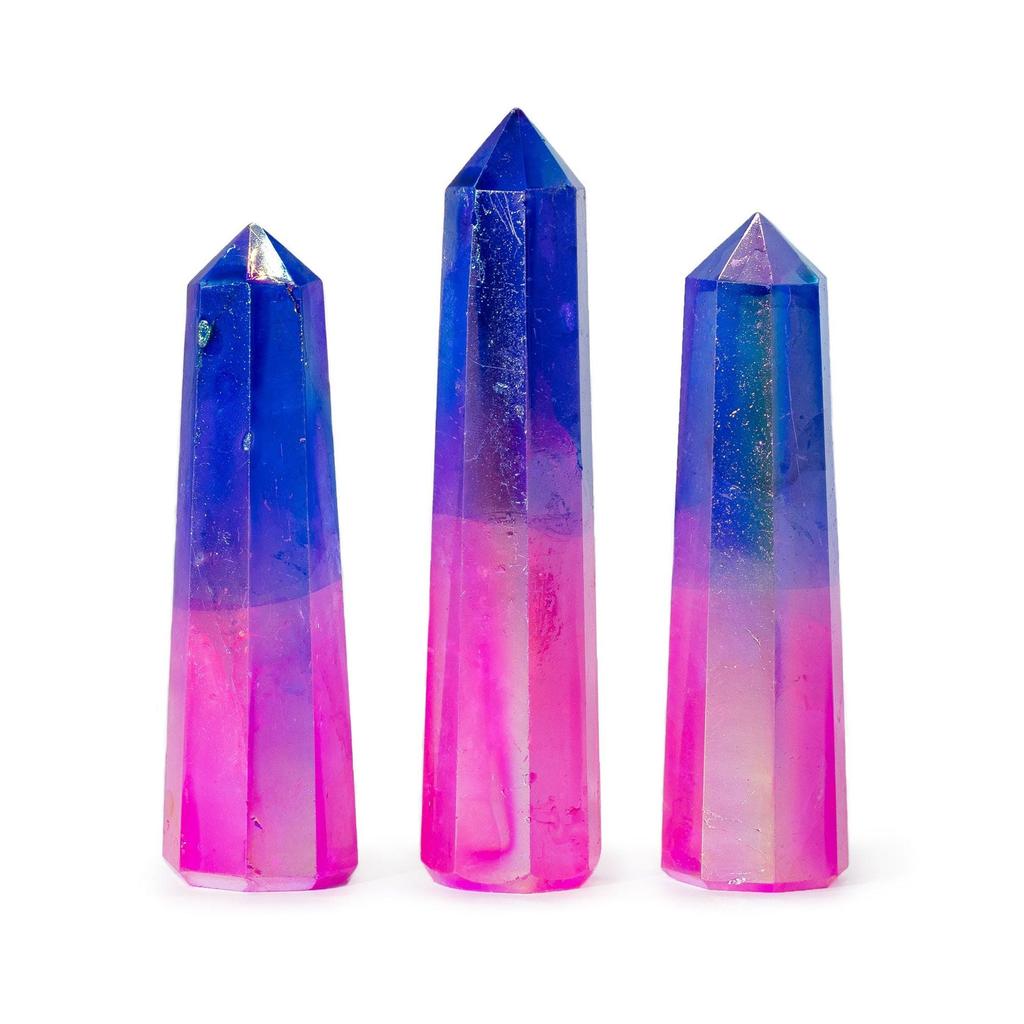
A polished quartz obelisk standing approximately 9cm tall, coated with a metallic vapour treatment that gives the surface an iridescent pink and blue sheen. Aurora crystal quartz — sometimes called aura quartz — is natural quartz that has been permanently bonded with a thin layer of metal in a vacuum chamber, creating the distinctive colour-shifting surface that catches and refracts light in a way natural quartz does not. This pink and blue combination is the most recognisable colour in the aurora quartz family — soft, cool-toned, and quietly luminous.
What Aurora Quartz Is
The base stone is genuine quartz crystal — the same mineral (silicon dioxide) found naturally around the world. What makes it "aurora" is a process called vapour deposition: the quartz is placed in a vacuum chamber and exposed to vaporised metals (typically titanium, niobium, or gold, depending on the desired colour). These metals bond permanently to the crystal surface at a molecular level, creating an iridescent film that will not rub off, wash away, or fade over time.
This is an honest distinction worth understanding: aurora quartz is a treated crystal, not a naturally occurring colour. The quartz itself is natural, but the colour is applied through human technology. Some crystal collectors value only untreated stones; others appreciate aurora quartz precisely because it combines natural mineral structure with a visual effect that nature does not produce on its own. Neither position is wrong — it depends on what you value in a crystal.
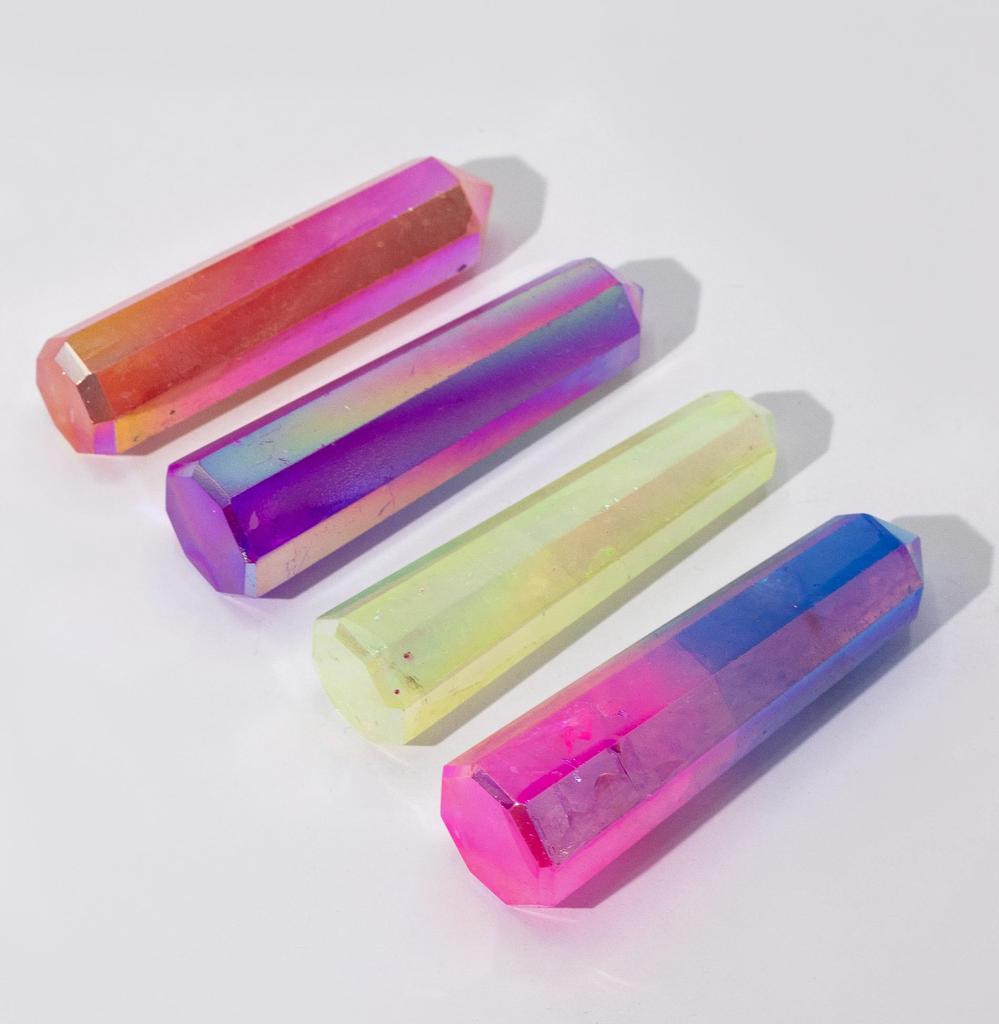
The pink and blue colouring shifts depending on the angle of light and your viewing position. In direct light, you will see flashes of metallic pink, violet, and cool blue moving across the surface as you turn the piece. In softer light, the effect is more subtle — a gentle iridescent sheen over the translucent quartz beneath. This light-play is the defining feature of aurora quartz and the reason people are drawn to it.
Each piece is unique. The vapour deposition process creates slightly different colour intensity and distribution on every obelisk, and the natural internal characteristics of the quartz beneath (inclusions, clarity, cloudiness) affect how the coating appears. Two pink and blue obelisks from the same batch will be similar but not identical.
The Obelisk Shape
An obelisk is a four-sided pillar that tapers to a pyramid point at the top, with a flat base that allows it to stand upright without a stand. The shape has been used across cultures for thousands of years — most famously in ancient Egypt, where obelisks were carved from single blocks of stone and placed at temple entrances. In crystal practice, the obelisk shape is valued for its vertical orientation and pointed tip, which practitioners believe focuses and directs energy upward. Whether or not you subscribe to that idea, the shape is undeniably elegant — it displays a stone's colour and light properties effectively and looks purposeful on a shelf, desk, or windowsill.
At approximately 9cm tall, this is a mid-sized obelisk — large enough to have real visual presence and catch light from across a room, but compact enough for a bedside table, desk, or grouped display. The flat base is stable on hard surfaces. The four polished faces give the aurora coating maximum surface area to interact with light.
Display and Light
Aurora quartz obelisks look best where they can catch light — a windowsill, a shelf near a lamp, or any spot where light hits the surface at changing angles throughout the day. The colour-shifting effect is most dramatic in natural daylight, particularly morning or late afternoon light coming from the side. Under artificial light the effect is softer but still present. Grouping multiple aurora quartz colours together creates an attractive display, as the different coatings interact with the same light source in different ways.
Care
The metallic coating is permanent and durable under normal handling. Clean with a soft dry cloth or, if needed, a slightly damp cloth — avoid harsh chemicals, abrasive cleaners, or ultrasonic cleaning, which can damage the surface coating over time. The quartz beneath is hard (7 on the Mohs scale), but the coating is thinner and more vulnerable to scratching than the stone itself, so store or display it where it will not be knocked against harder objects.
Aurora Quartz in Crystal Practice
In crystal healing and energy work traditions, aura quartz is often associated with the upper chakras — particularly the crown and third eye — and is used in meditation, intention-setting, and space-clearing. The pink and blue combination is specifically linked to emotional balance, calm, and openness. These are traditional associations rather than scientifically verified claims, but they are widely held in crystal practice communities and may be meaningful to the person you ar


 No-delivery refund


![Amethyst Natural Crystal Carefully Rough Feng Good Purple Amethyst Home Decor [TANAKA YA] High-Quality Point, Selected, Approx. 2307055mm, Weight](https://img.joomcdn.net/ab6a4bfc84f2d83a42f42c743ea473bcdaa0eb0c_100_100.jpeg)
![[GOLD STONE] Pink Opal Orgonite Pyramid, Spiritual Item, Approximately 30mm Wide, No Coil](https://img.joomcdn.net/6c4e21c108185f6364c18c1d81bd70c59d8ea7c2_100_100.jpeg)


![[GOLD STONE] Pink Opal and Single Crystal Quartz Orgonite Pyramid, Spiritual Goods, Approximately 55mm Wide](https://img.joomcdn.net/177630fbd83667ff827c490ab0316070ed4ec39e_100_100.jpeg)

![[GOLD STONE] Orgonite Pyramid, Natural Stone Pebbles, Amethyst, Round Bead, Approx. 5cm Wide, Ornament, Power Stone](https://img.joomcdn.net/8448fe9ac2c3262e4894344ff101d30d7e63ee0c_100_100.jpeg)
