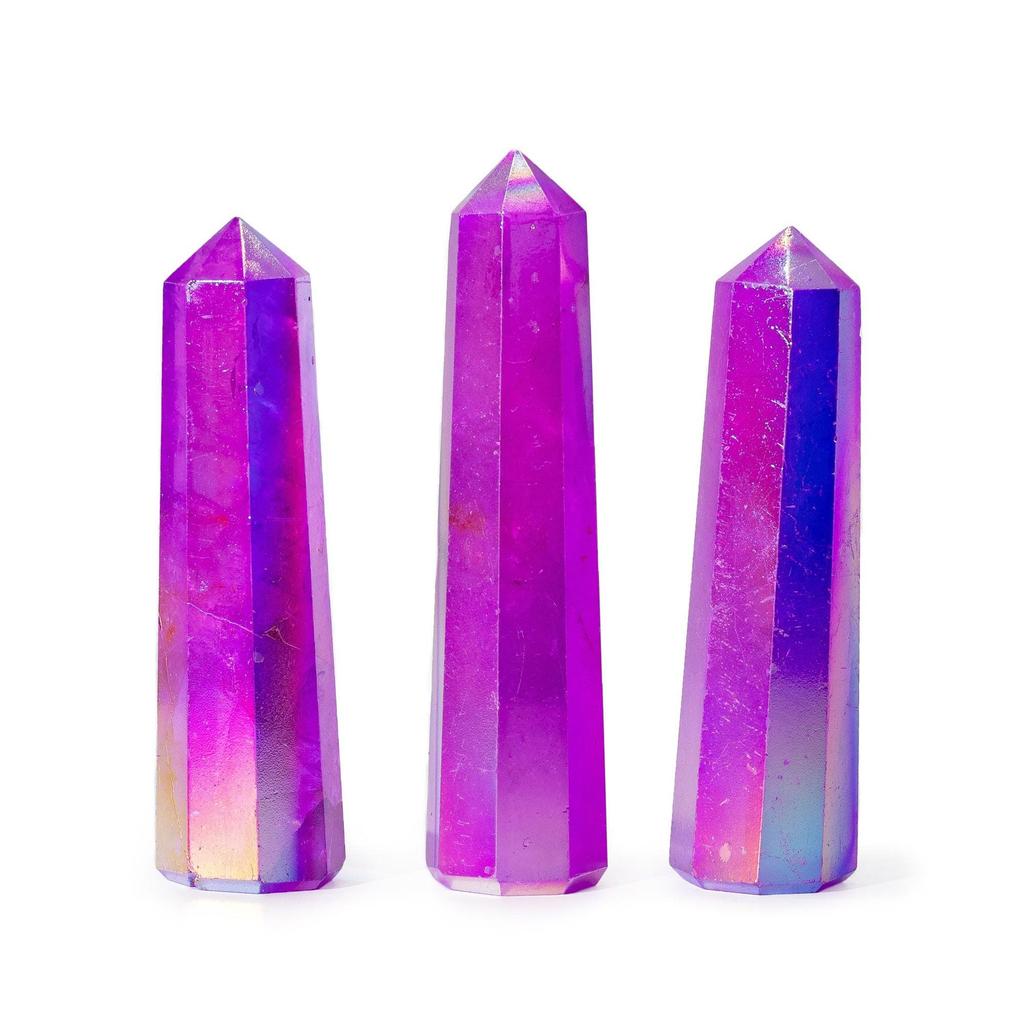
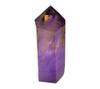
A purple Aurora crystal quartz gemstone tower brings a clear point of colour to a shelf, desk or quiet corner. Its obelisk shape feels architectural, drawing the eye upward while the violet surface catches shifting rainbow light. It is a small sculptural anchor for anyone who likes their home objects to hold both beauty and meaning.
The form in the room
The pointed tower shape gives the piece a calm, upright presence among books, candles or other stones.
Violet tones make it feel rich without being heavy, especially where daylight can catch the surface.
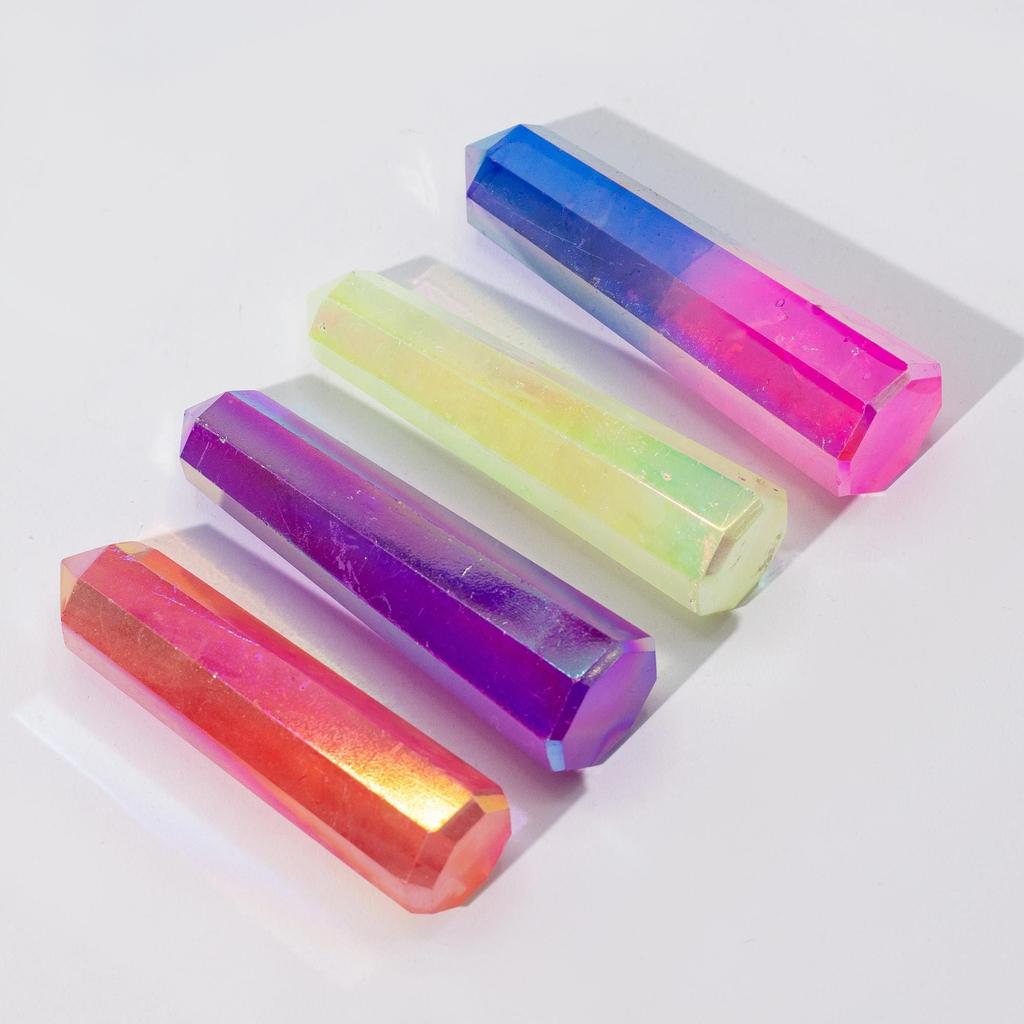
The rainbow-like iridescence changes as you move around it, so it never looks entirely still.
Chipstones and wire bring fine detail into the form, giving the piece a layered, collected look.
It works well as a single focal point, or as height within a small crystal display.
Quartz, chipstones and orgonite
This tower is made with crystal quartz, chipstones, wire and orgonite. The finish is all about contrast: a clean obelisk silhouette, vivid purple colour, and a surface that gleams differently as the light shifts.
How to place and care for it
Place it where it can be seen from the side as well as the front, such as a desk, mantelpiece, bedside table or meditation space. A little natural light will show the iridescence, though it does not need direct sun to be striking.
Dust gently with a soft, dry cloth. Keep it away from prolonged damp and avoid abrasive cleaners, as the surface is part of its visual character.
The obelisk and the stone
The obelisk form has a long architectural history, most famously in ancient Egypt, where tall stone pillars were linked with the sun and with presence in sacred and civic spaces. In a gemstone tower, that grand geometry becomes intimate: a point you can place on a shelf, desk or altar-like corner. Quartz has long been associated in crystal traditions with clarity, focus and setting intentions. Here, the meaning stays quiet and personal, carried through colour, …
region of manufacture: India


 No-delivery refund
![Amethyst Natural Crystal Carefully Rough Feng Good Purple Amethyst Home Decor [TANAKA YA] High-Quality Point, Selected, Approx. 2307055mm, Weight](https://img.joomcdn.net/ab6a4bfc84f2d83a42f42c743ea473bcdaa0eb0c_100_100.jpeg)


![[GOLD STONE] Orgonite Pyramid, Natural Stone Pebbles, Amethyst, Round Bead, Approx. 5cm Wide, Ornament, Power Stone](https://img.joomcdn.net/8448fe9ac2c3262e4894344ff101d30d7e63ee0c_100_100.jpeg)
![[N2 Stone Natural] Natural Amethyst (Purple Crystal) - Mexican Gemstone | (14 | "One-of-a-kind" Approx. 8.8ct [Length 34mm])](https://img.joomcdn.net/708da0367bfa0579f3e12ff626972bf699ce6ed0_100_100.jpeg)



![Amethyst Natural Carefully Selected Natural Raw Feng Good Luck [TANAKA YA] Cluster, 100% Quartz, High-Quality Stone, Approx. 947557mm, Weight](https://img.joomcdn.net/696c7b35918a13b149bc28473fc1c57f227cda8f_100_100.jpeg)